.png)


How would you describe Parottee’s natural landscape, and how has it shaped the way people live, work, and spend time in the community?
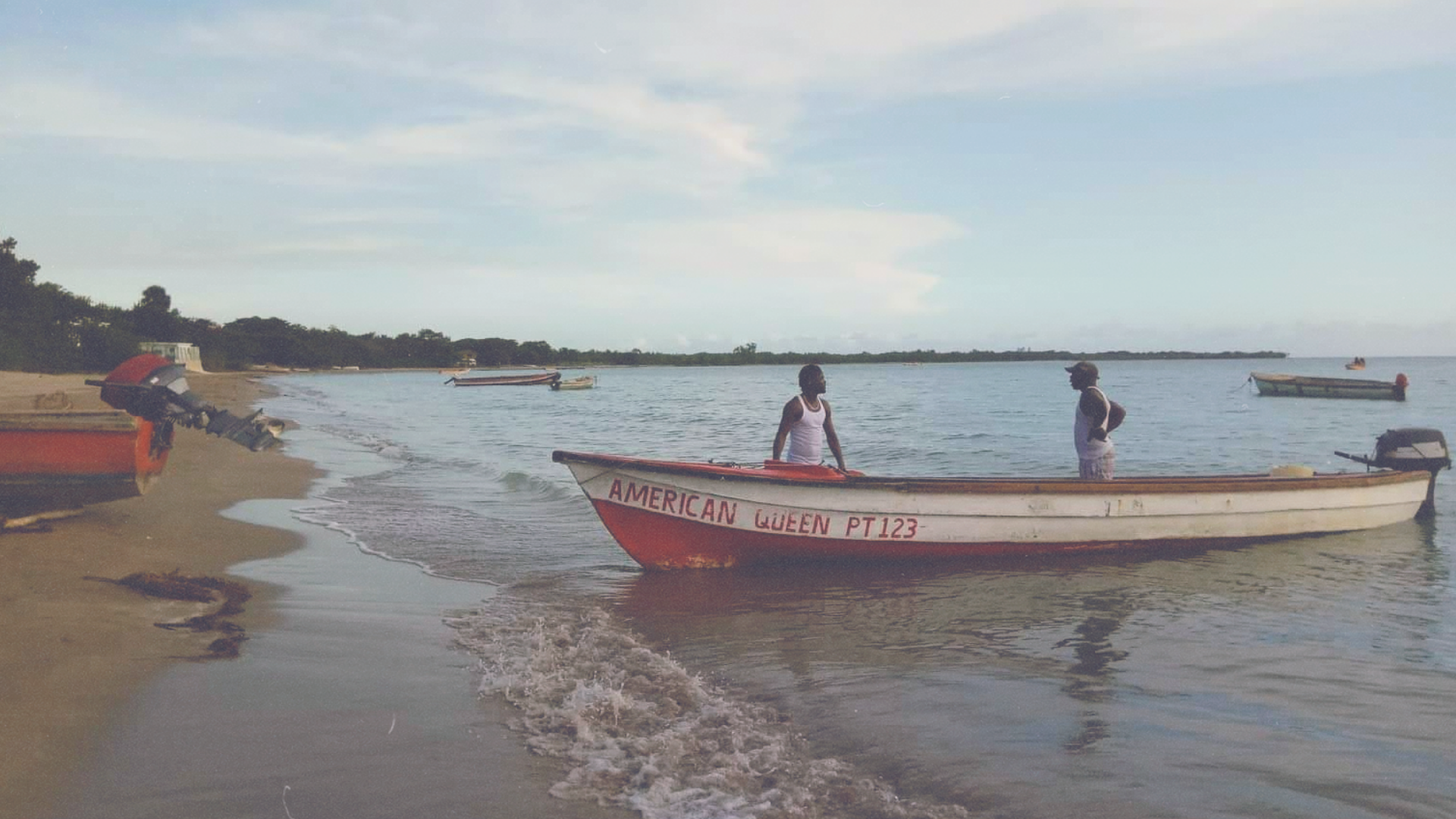
Handel Bennett (HB): The residents of Parottee are fishermen by trade. Whether it's fishing, making fish pots, cleaning or selling the fish, or cooking it in restaurants - most people's livelihood is tied to the fish industry. That's the primary economy in the community. Naturally, I come from a family of fisher people; from my grandfather to my uncles and my dad. All the oldest relatives I have now, my parents' oldest siblings, were born in Parottee and are fisher people. My family's roots have been planted there for close to 100 years.
When I was growing up, the Pedro Keys served as a fishing hub. The men in the community, and women too, would go out to the Keys and essentially live there, setting their pots from there for a month or so at a time. Then they'd come in with all the catch from that period and sell it on shore. My dad did that as I was growing up, and my mom was the one who managed the sale and distribution when he came in with the fish. Fish vendors in the Black River Fish Market or even in the Santa Cruz Fish Market will probably be from Parottee because that's what they've known.
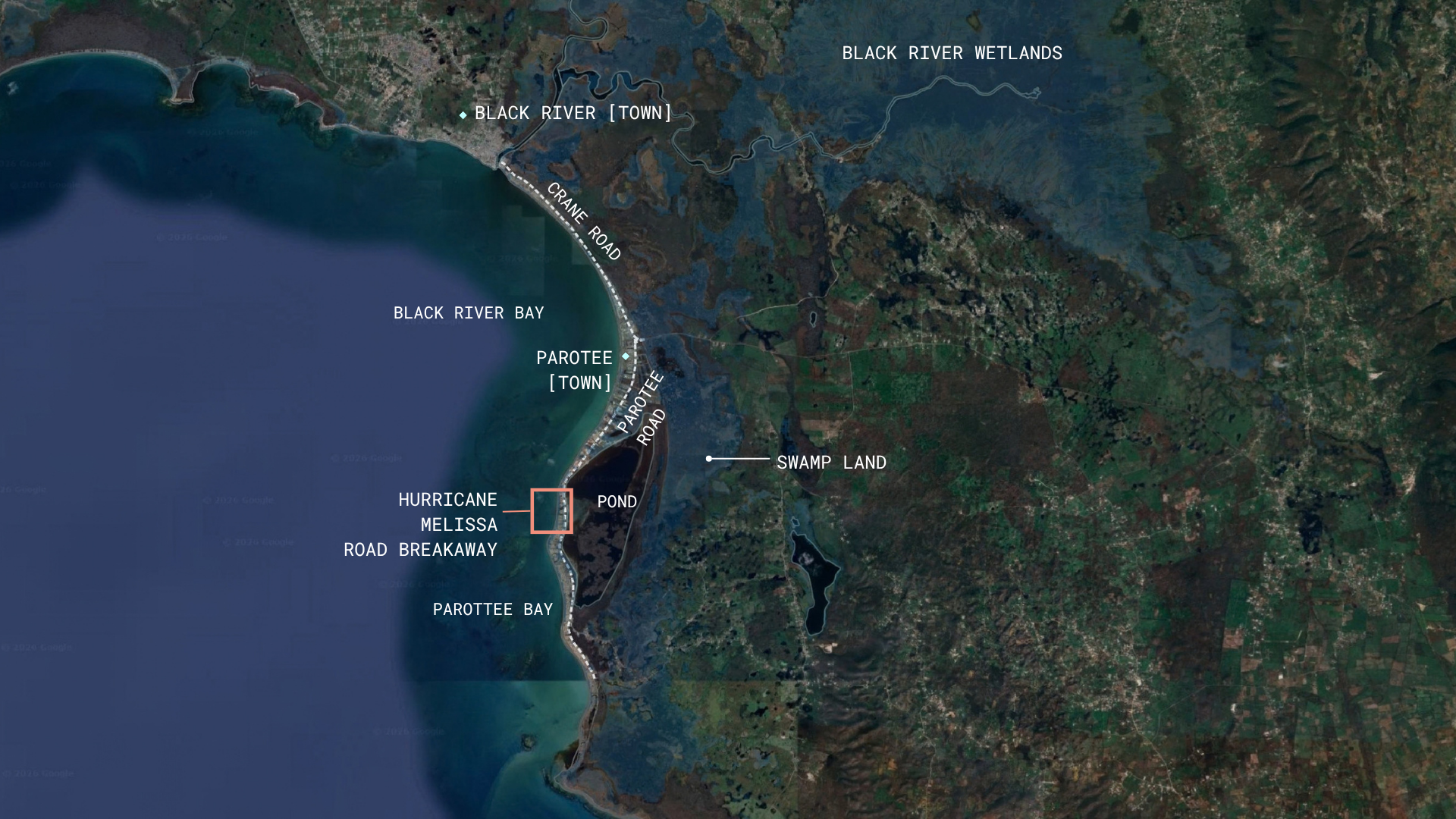
To understand Parottee, you have to picture the Black River wetlands. Parottee itself stretches along the coast of Black River, which is very vast and goes very far inland, like Slipe and Fullerswood. But a lot of the areas around the coastal parts are wetlands—they're swampland, and once you get to places like Mountainside, it starts feeling less swampy. Parottee itself is built in a sort of circle around one of the ponds in that group of wetlands. People mostly live on the side between the road and the beach, while on the opposite side of the road is all swamp.
The road runs about 300 meters from the shoreline. As you drive, you can see the beach in most areas. All of this would be one massive swamp if not for the roads we've built. There are a few drainage points under the road that link the Parottee side to the wetlands on the Black River side. When I was growing up, there weren't many buildings on the swamp side at all; it was largely just open mangroves. The mangroves sit on a dark, peat-like soil that's almost like hard clay and absorbs a lot of water. It would take a lot of rain for the whole area to fill up.
What are the most significant changes you’ve noticed in the landscape over time?
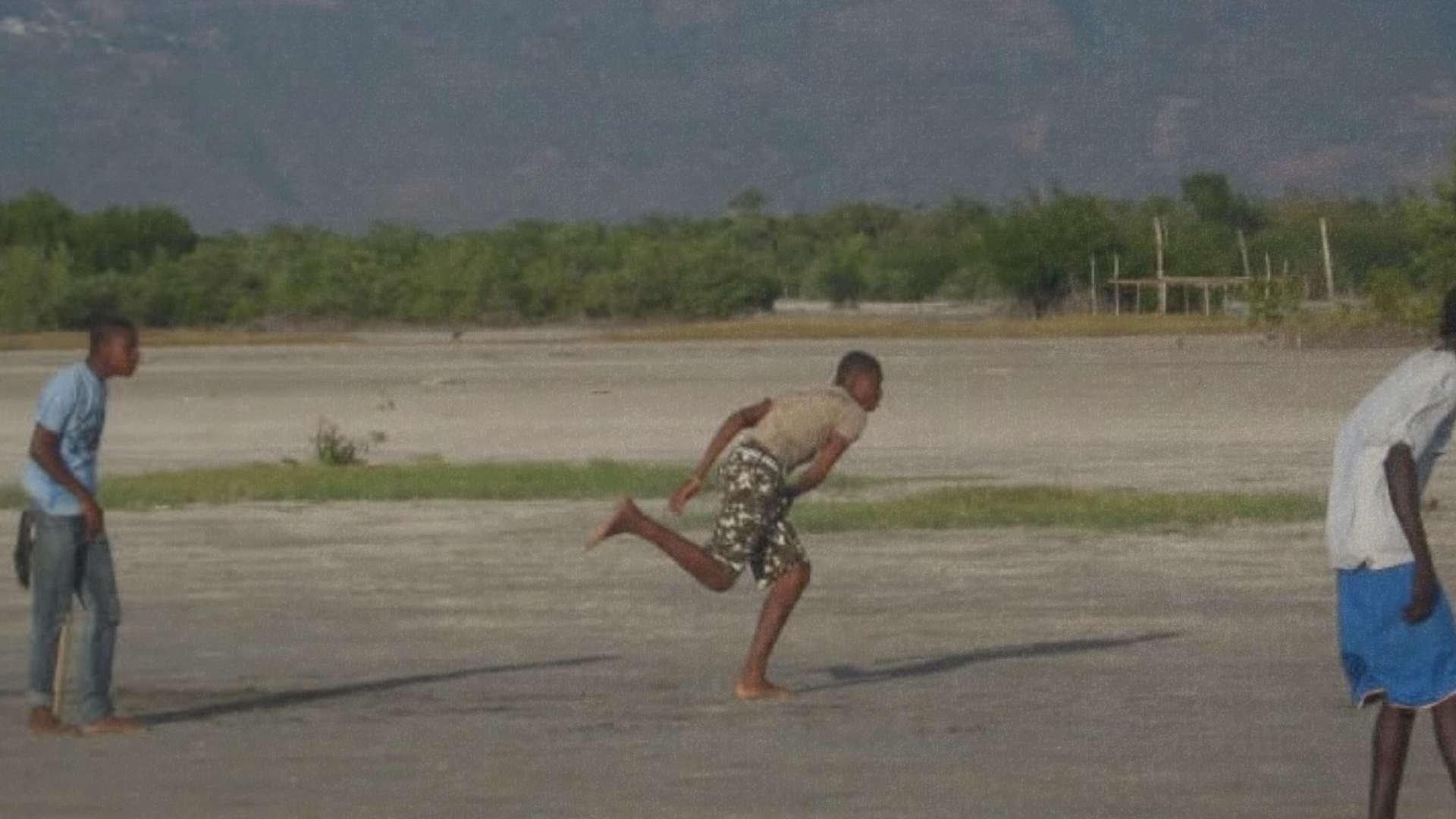
HB: The road has always been the primary thing that cuts up the swamp. There would be ponds of water as you go further into the wetlands. But at the very front, all of that was open space that had very thick soil to the point where we could bounce a cricket ball off it. Back then, the area served as a big recreational space for the community. So, every evening we came home from school; that's where we'd go play ball. That's where I learned how to ride a bike, play cricket, and football. The ground was so firm we could bounce a cricket ball on it.
There would have to be a lot of rain for the entirety of the mangroves to be filled with water. That's how it was consistently when I was growing up. The first time I saw the pond filled was post-Ivan. That was 2006, which was one of the busiest hurricane seasons on record. Five to ten years later, in the mid-2010s, the pond went from being intermittently wet to consistently wet. It takes two or three years, or a major drought, for the front areas of the pond to dry out again.
What caused that shift from the pond being occasionally flooded to permanently wet?
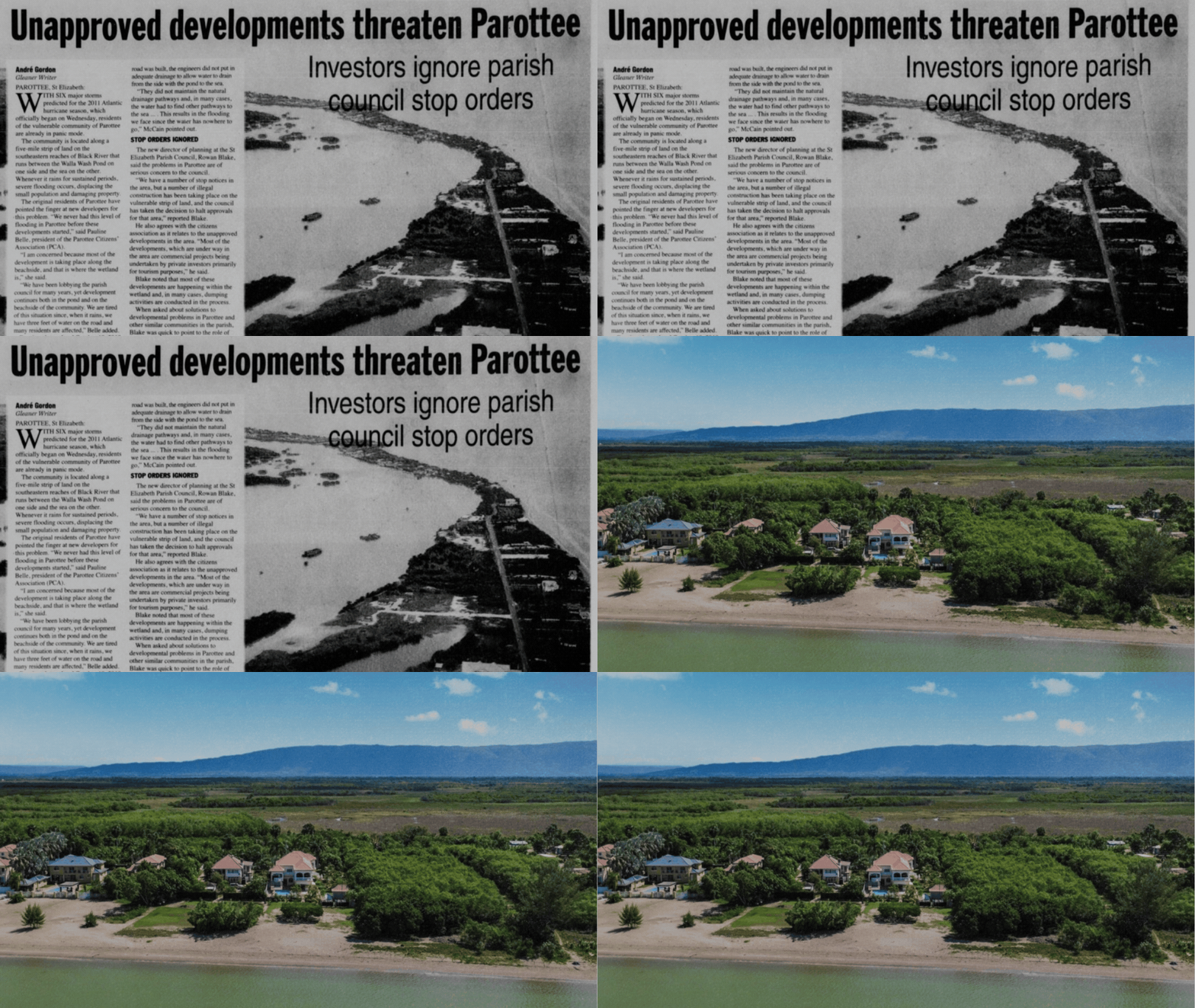
HB: In that 10-year window between 2005 and 2015, Parottee hadn’t undergone any major development, except that a lot of construction projects took place on the mangrove side, which generally required a lot of dumping of limestone and marl. Construction projects weren’t going deep into the middle of the swamp to dump land and build; instead, they built outward. They extended from the roadway into the mangrove zone.
Along Crane Road, coming in from the Black River, there are a lot of vacation homes, operated by 'investors’ who don't live in the community. That gateway into Parottee is where a lot of the so-called development has happened, with encroachment further into the swamp to build more vacation homes.
Those owners are very disconnected from the community. There are one or two vacation homes mixed in with local residents, and those owners tend to be more integrated; you'll find them hanging out with residents. But the ones further up, we've never seen them. They pay somebody to watch the house, sometimes people from the community, but usually people from other parts of the island. My mother's shop was one of the first shops on the residential side, so the watchmen from the vacation homes would come hang out there. Every now and then they'd get a phone call from their boss, so we know they exist, but we never see them.
There is a nature reserve of sorts that is part of the Black River wetlands system. I don't think you can get a construction permit to build on that side. Yet it has expanded so much. Did the regulation come into place later, after all of the construction happened? I don't know. But I know in recent years, people attempting to build on that side have received cease and desist orders from the police. So now there is an attempt to regulate that.
There is a formal drain that exists from the pond to the ocean. The practice, whenever the pond fills up, would be for the community members to go to that drain and clear it. They called that area the ‘creek’. At some point, the creek was filled in with limestone and marl. That blocked the flow of water to the ocean through that drain. The dumped-up area was then lotted out and sold to the highest bidder. I know one house has been built there, and I went and talked to the owner - a guy from Washington, D.C. When I pointed out the history of the plot, he said his dad bought it, and that it was the first time he was hearing about it.
I believe him; the dumping happened before they bought it. I'm not sure who was responsible, but somebody who perhaps felt they had a claim to the land dumped it up and sold it off in lots. Now there are multiple owners.
What was the impact of Hurricane Beryl on the community’s infrastructure, and economy?
HB: Beryl was more of a wind hurricane; it didn't come with a lot of water, but it caused a lot of wind damage. It devastatingly impacted the fishing communities on the coastline. Fishers generally had to rebuild their livelihoods from scratch because they couldn't find [fish] pots due to Beryl’s heavy winds. Boats got damaged too. That, I think, is largely the memory of Beryl in Parottee. A lot of people considered Beryl the strongest hurricane they'd experienced in a long time, similar to Ivan and Gilbert.
The community has paid a heavy price for the hurricanes we've experienced over the past twenty years. It's made fishing a lot less attractive; my generation fishes a lot less than the previous generation did. There may be some ecological factors too. I wouldn't be surprised if fish stocks have been depleted by overfishing. But with every hurricane, fishermen basically have to start from scratch.
There are government aid programs that are intended to help people in their recovery after the hurricane. But the government rebuilding grants are not enough to rebuild a home. So, community members will go pick up the sheets of zinc for roofs because they can't afford it otherwise. Some families end up consolidating households; multiple families under one roof. There was certainly a lot of that from Beryl leading up to the time of Hurricane Melissa.
What was the impact of Hurricane Melissa?
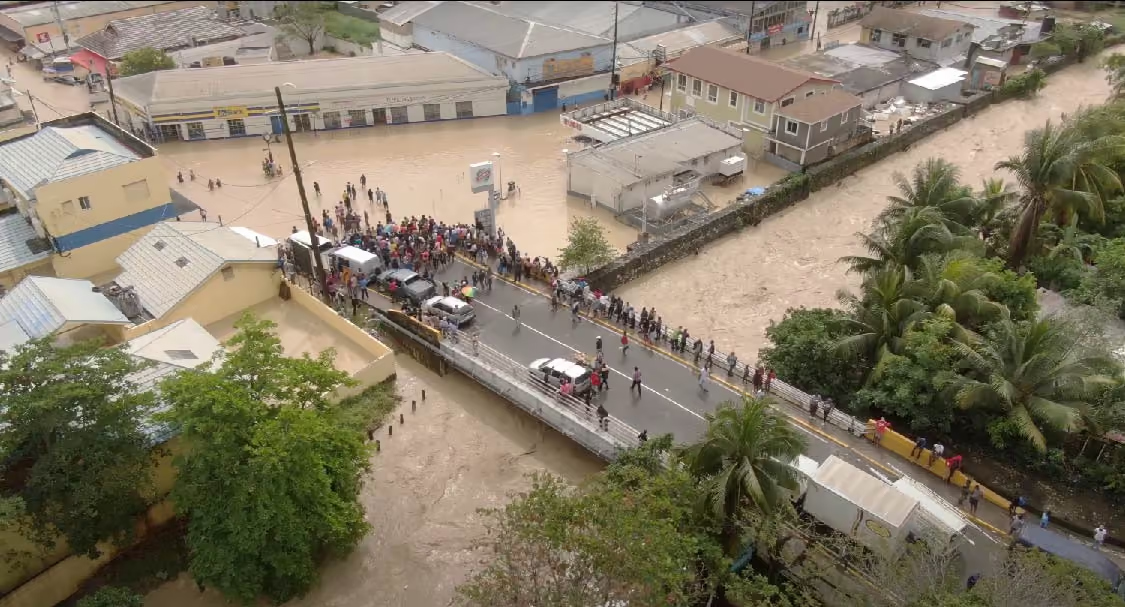
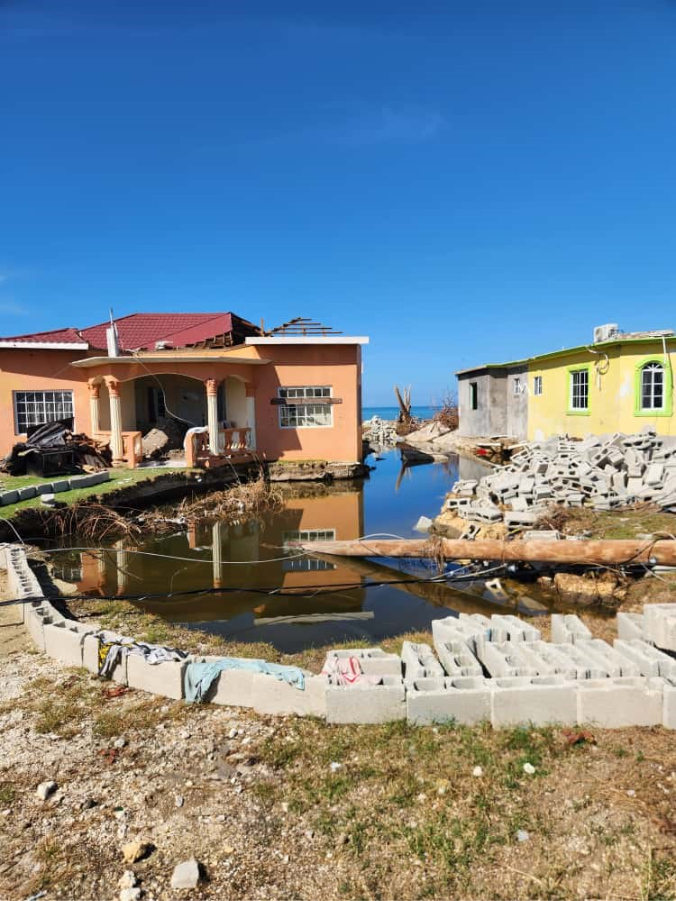
HB: Compared to Beryl, Melissa made everything look like child's play. The most devastating effect that Melissa brought was the storm surge. The ocean rose 10 feet (ca. 3 m) and washed miles inland. This meant that the pond had 10 feet (ca. 3 m) of seawater to absorb.
When the sea washes ashore, it brings a lot of marine life with it, like fish and crabs. I found eels in my mother’s yard. My mom's house is roughly 300 meters from the water.
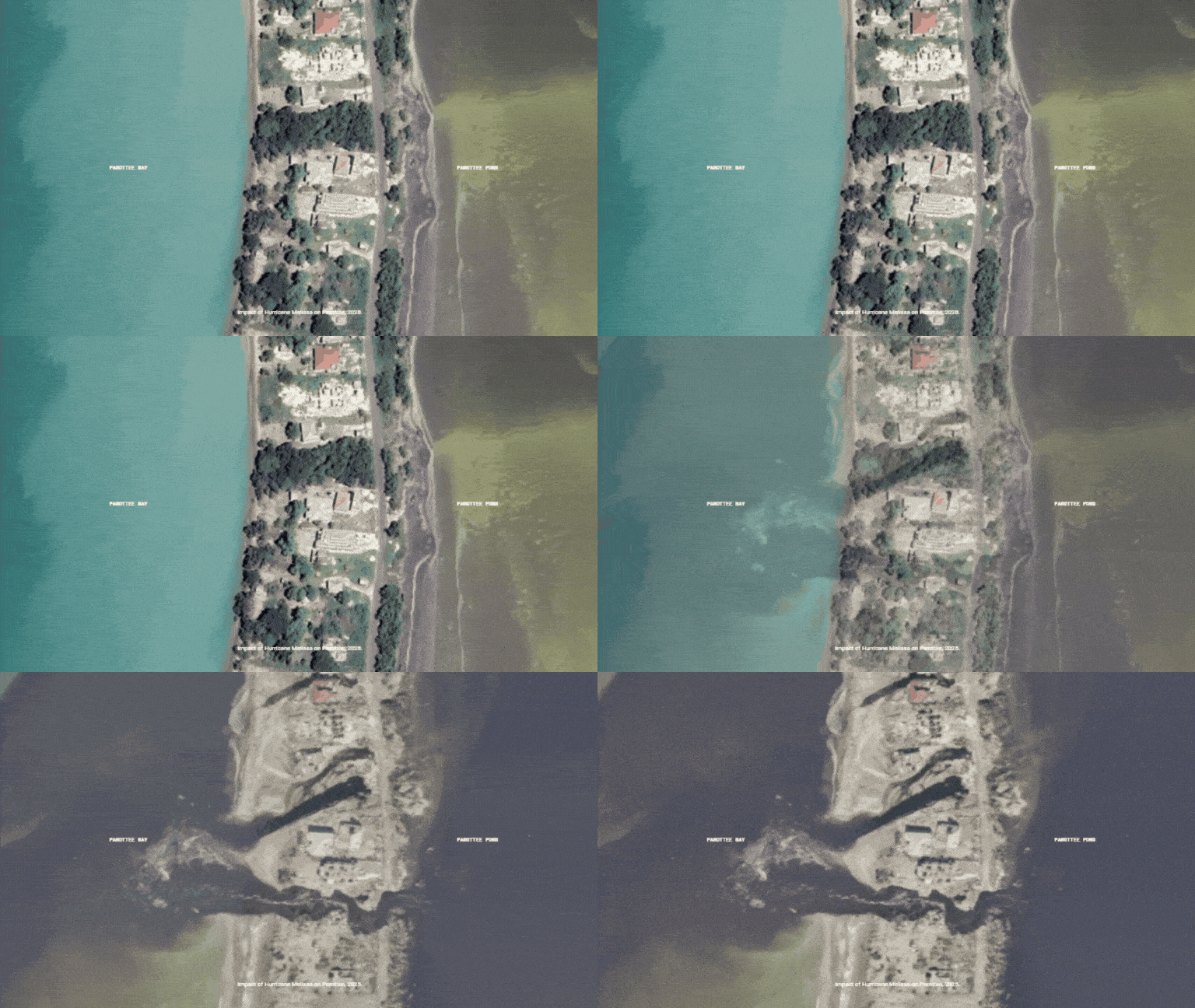
The pond would naturally have served as a bit of a buffer for the storm surge, but it was already full, so it didn't have the capacity to absorb much of that. Normally, water drains out of the pond either through the under-road drain that links it to the Black River wetlands, or through the creek to the ocean. But the creek had been blocked, so there was no drainage path to the ocean. The water made its own way. It broke trenches across the main road, and where it flowed over the road, it cut trenches through people's houses.
Immediately, a lot of yards had become eroded so severely that the ground dropped below sea level, with huge amounts of sand washed away in every direction. That has left a lot of the community on edge because they have seen what high tides are capable of.
Is there a vision of returning Parottee to a multigenerational fishing village after the hurricanes? Do residents feel like that is even possible?
HB: Our member parliament is the Minister of Fisheries, Hon. Floyd Green. So, I'm sure the community impact is not lost on the government. They have tried to set up some cold storage stations in the community, so that if fishermen are able to go out and bring in a catch, they have a place to store it during the power outages after these storms.
A lot of disaster relief does not necessarily come from government channels, but rather from philanthropic efforts of other Jamaicans and organizations trying to help Jamaica. There are repair groups that come around and help people fix their boats post-Melissa, like Food for the Poor. They have campaigns to distribute fishing pots and fishing pot wires so that the fishermen can remake the pots that they lost during the storm.
But to me, those are the low-hanging fruit. The big rocks aren't being moved, and that's largely infrastructure. But NGOs don't have the capacity to fix all the damage that has occurred, like the erosion next to people's house foundations and the houses that are tipping over.
Even in the fishing space, it's the same. You can get a couple of rolls of wire to build some pots, but you're still at a huge deficit. There are a lot of smaller pieces that go into getting your boat ready to go out to sea, like ice and gas. That's a huge investment for fisher people. So even if they get a grant to help fix the boat, they haven't had any income for nine months. How can they fund their next trip?
The help only goes so far. You may get some help if your roof has minor damage, and you may be able to repair it and move back in. Or you may be able to fix up one room, but you're not going to be restored to your pre-hurricane level. It's not that I or anyone expects the government to put somebody exactly where they were before the hurricane. But a lot of the government efforts and investments are just not productive.
I'll give you an example. Some of the grants are only sheets of zinc, and often what is distributed is not enough for repairs, especially if my entire roof is gone. So, I'm just hugging my ten sheets of zinc until I can buy the rest, and buy the board and the nails, and pay the workman to put on the roof. The authorities give themselves a lot of credit for doing something, but that ‘something’ may just be sitting in an unfinished house somewhere, not actually being productive.
What were your thoughts on the government’s narrative that Parottee was ‘unliveable’ and that residents should not rebuild there?
HB: Every living space has to contend with nature, and you have to design your living space to withstand those elements. Parottee was not designed to contend with nature. Or perhaps you could say it was functional with the elements of nature, but that functionality was degraded over time. A lot of the infrastructural issues that people are pointing to as reasons why it's unliveable are due to engineering design. I believe this is fixable.
But I think our officials are calculating that this investment to fix the engineering flaw is not worth it for a poor fishing village. I don't think that if all the residents of Parottee were to move out tomorrow, Parottee would just be vacant space for the rest of time. I think the government would then invest in doing something else with this space.
The real question here is, does the government have confidence or belief in the productive potential of the people? As a resident of Parottee, I have a lot of confidence that the people of Parottee can repay whichever investor decides to help us rebuild. I think that the ingenuity of Floyd's Pelican Bar is a great example. That space has brought in a lot to the local economy, not just Parottee but also other communities like Treasure Beach.
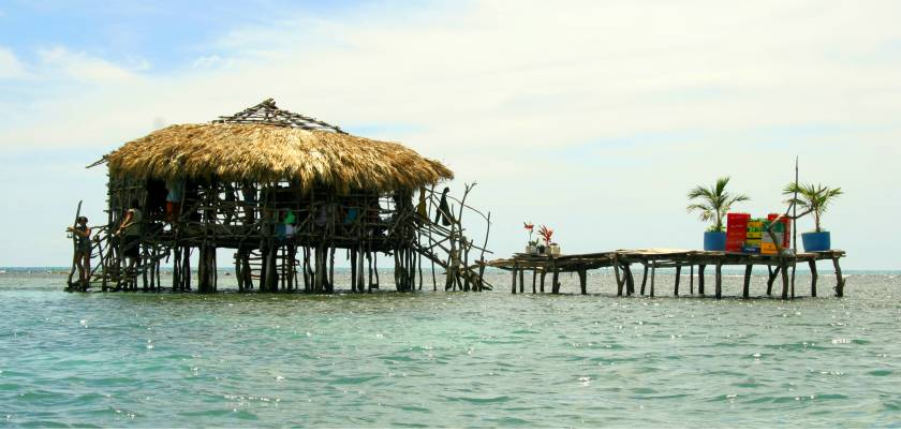
Investing in residential space can be just as profitable as investing in commercial space. Our officials are probably a little bit too shortsighted to see that. They feel like they need to make Parottee into South Beach for it to be productive. They think that they need to bring more beach houses for it to actually be productive. But the people who live here have actually been productive and will continue to do so, especially if they are willing to invest in us.
What is your take on the Minister of Tourism, Edmund Bartlett claiming that the stretch from Black River to Parottee will become the new ‘South Beach’?
Edmund Bartlett in Parottee. Video courtesy of Handel Bennett.
HB: Maybe my starting point here will be to highlight the obvious deceit that has surrounded the Hurricane Melissa government actions in general. The days after the hurricane, I would tune into the government post-cabinet press briefings, where they would be talking about how amazing the response was and how prepared they were for this storm. But at the same time, Parottee was witnessing absolutely no state infrastructure to manage any of the problems that the community as a whole was dealing with. Yet, at the national level, everybody was patting each other on the back.
Concerning the development plans that have been circulating on social media, we've seen the Prime Minister or the Minister of Tourism talking about it. But there has been no engagement on this topic at all with the community. We had to find out through a Facebook video. They have shown how little regard they have for us. Conversations are clearly happening behind closed doors, but the people who are affected the most, aren't part of the conversation.
The reaction of residents, though, is generally mixed. Some residents in the community are excited at the prospect of leaving. But where would we go? Much of our lives have been formed around the water. Can we recreate the same community in another location?
The other piece is mistrust. People don't trust that the officials will give them a fair trade for their homes and livelihoods. Can we go to another location and be able to rebuild the housing that we had in our current location?
What do resilience planning and preparation in Parottee look like nine months after Hurricane Melissa?
Right now, it feels as if we are in limbo between relocation and rebuilding. The relocation efforts seem minimal. The CEO of NaRRA, Major General Antony Anderson, visited the community for a tour recently, to kick-start community discussions. It's been nine months, and you're just starting to have community discussions to understand what concerns the residents in the community have?
I almost get the sense that the officials don't want to pick a route. They're just waiting for something to decide for them. [Either way] there's ongoing devastation; the knock-on effects of Melissa are still at play. In the town of Black River, there's not much happening, and a lot of people don't have jobs. That turmoil may force people to move on their own. Essentially, it would be a tactic of making the community unliveable for residents, to the point that they have no choice but to leave. People would be relocated, but pseudo-forcefully. Every time I say things like this out loud, I worry I'm putting ideas in people's heads.
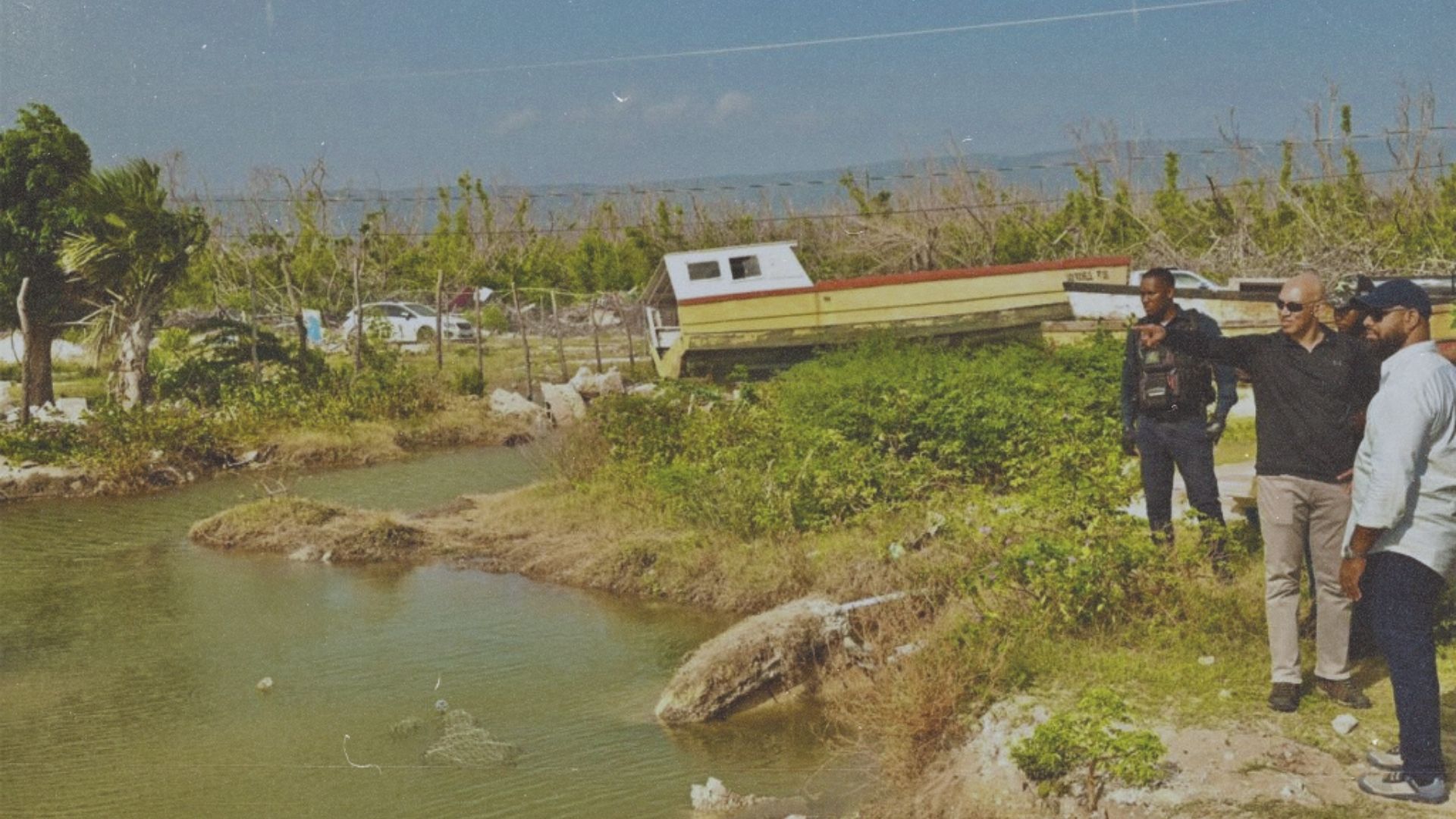
The unfortunate thing is that the community consultation piece is still non-existent. The community members need to force the issue a lot more. We can't simply wait for the government officials to come and dish out whatever they want to us because we know that they have other interests that are in direct contradiction to ours. We owe it to ourselves and our children and our children's children to be more proactive because it's that lack of proactivity that kind of got us into the state of devastation of Melissa.
So that's my silver lining here, and I hope that the residents can at least establish some sort of structure amongst themselves to make a case to the government on what they want, rather than just waiting. Right now, the current state is a state of vulnerability. Lives are fractured, but they're moving.
Fish are coming in and out, maybe not to their full capacity, but little by little, and Pelican Bar has been back up, and little by little, you know, more and more tourists are coming into the community. We're vulnerable to another disaster, but I think we passed the emergency relief phase of requiring assistance to live or to survive. The next plan of action is to figure out how to restore the community to its former glory. That is the most difficult part, but it also forces us to be a little bit more proactive rather than reactive, as we have been.

.png)