.png)


My words to you Jamaica, definitively, you are going to see increases as long as this [war] continues. We will do what we can do, but it is important that you do what you need to do and understand that you need to conserve starting today, today, today! The government is going to have to look at policies to limit movements, especially transportation movements …maybe a COVID - hybrid version of work from home, but something has to happen. Because the level of traffic I am seeing on the road does not show me that anybody realises that there is a war and that the price of fuel and oil are just continuing to go up and up and up. - Daryll Vaz, GOJ Post Cabinet Press Conference, April 15, 2026
Jamaica is entering the early phases of perhaps the world’s greatest oil crisis in recent history, and the centrality of our transportation system to this crisis could not be any clearer. The fact that the Minister of Transport has considered COVID-era movement restrictions and not encouraged public mass transit or walking/biking in a fuel crisis should indicate that car-dependency is official state policy. Our public transportation system is so wholly inadequate that the government would rather restrict the movement of people, effectively crippling parts of the economy, rather than promote public transportation (via JUTC) as a policy directive.
Jamaica’s most volatile times as an independent nation have followed the global fallout of an oil crisis. The Gas Riots of 1979, 1985, and 1999 stand as violent emblems of the extreme vulnerabilities our way of life faces with a largely unchecked dependence on fossil fuels. Transportation is foundational to the productivity of our economy, and with a car-centric system, extreme vulnerabilities like the one we are currently facing are almost inevitable.
Our transportation system is distinctly car-dependent, which means Kingston has an increasing level of per capita car travel, car-oriented land use patterns, and reduced transport alternatives. In 2019, the largest single import into the island was refined petroleum, with the largest portion used in the transportation sector. The second-largest was low-occupancy private cars, with the vast majority powered by imported fossil fuels. The data suggest that reducing our car dependency would substantially increase our preparedness for global oil shocks and reduce the economic fallout we will most definitely experience.
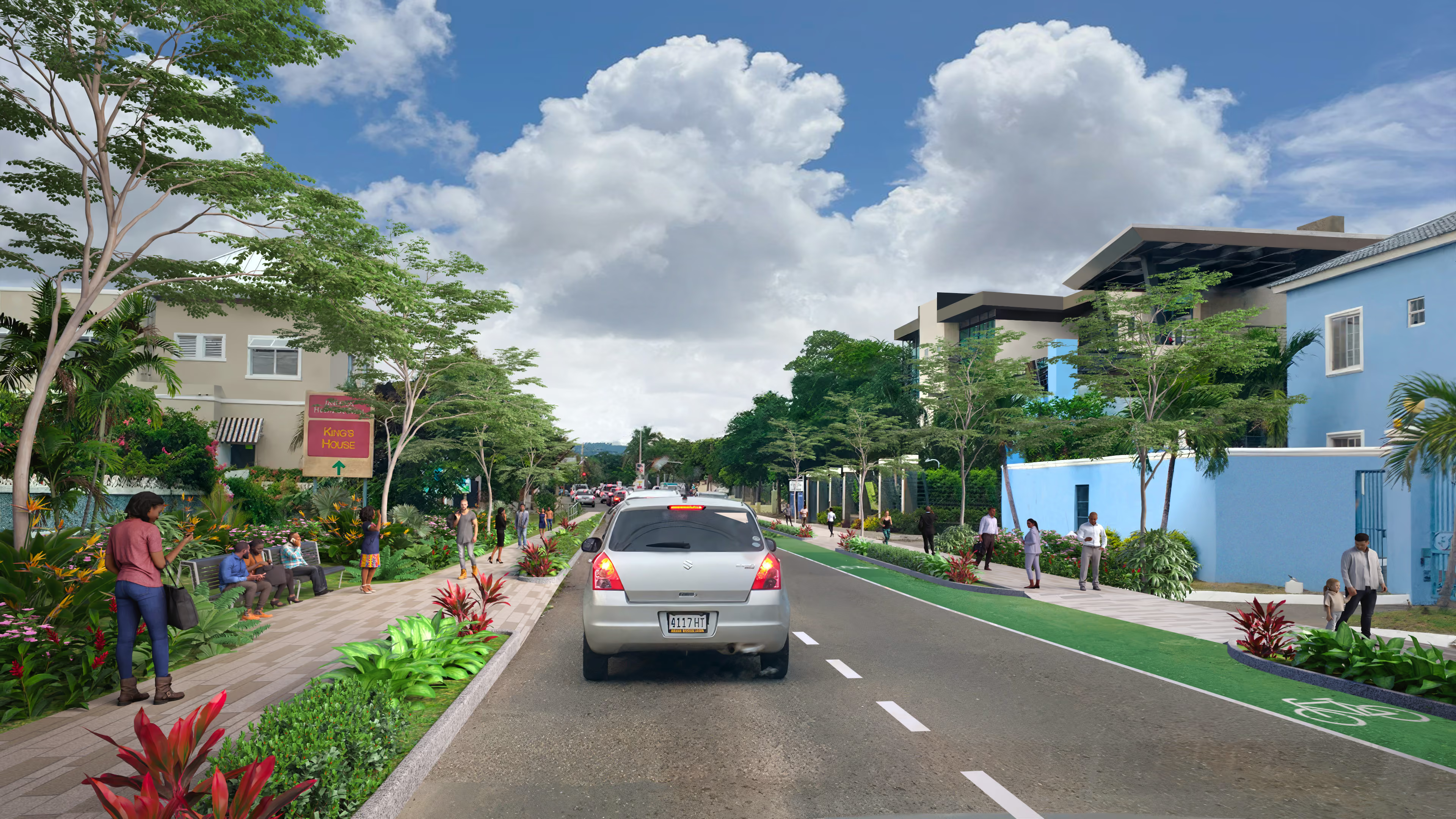
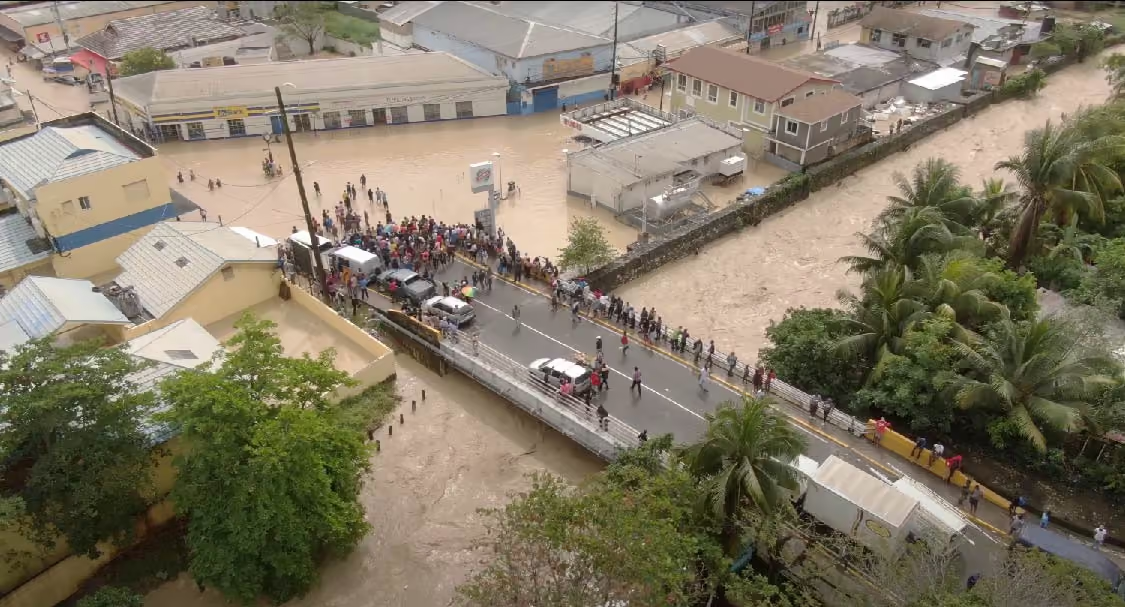
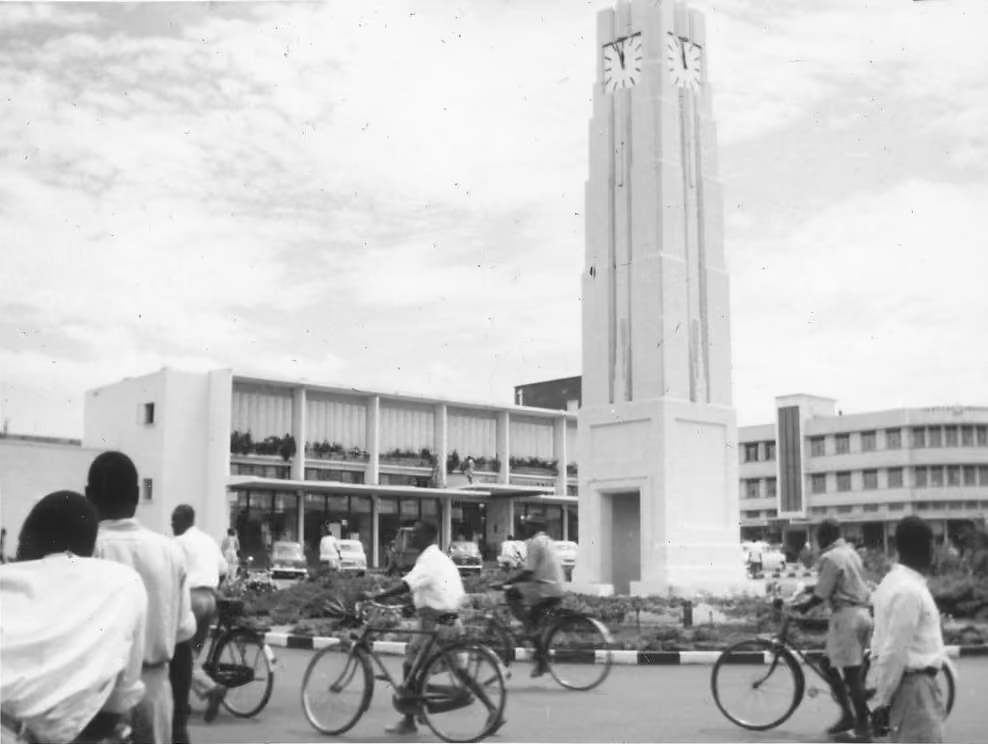
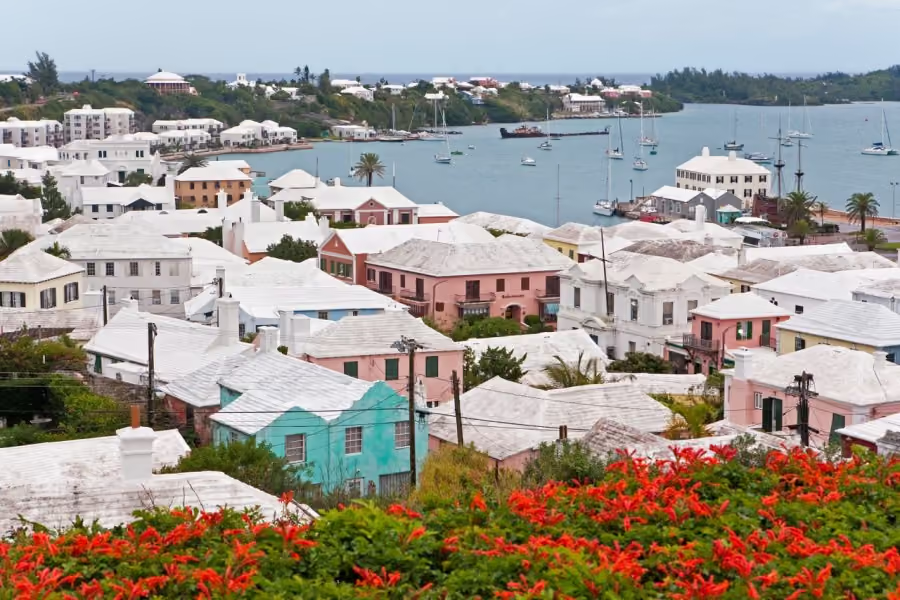
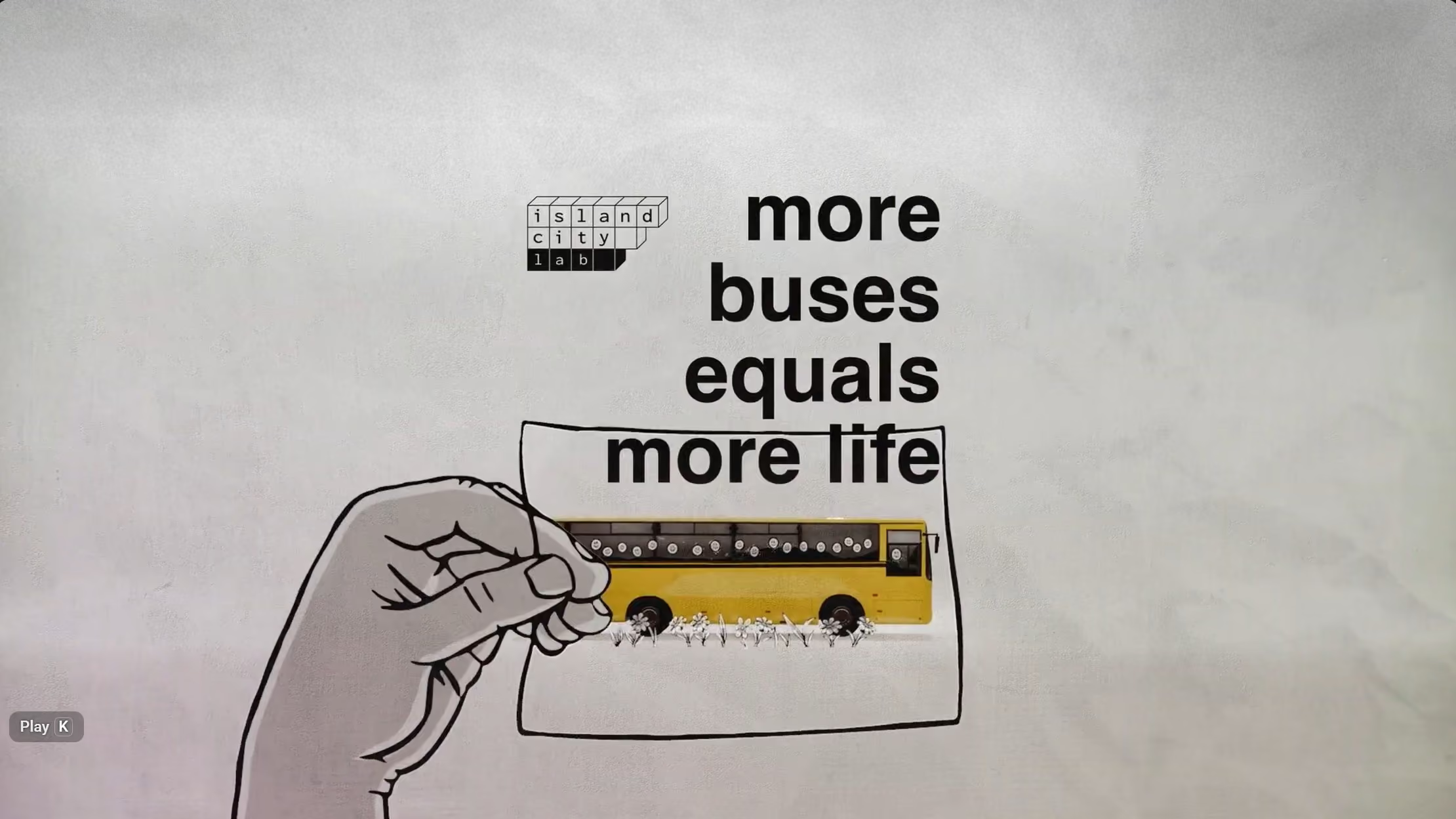
Island City Lab has been researching and promoting alternatives to car-dependency for several years, and one of the most central and obvious solutions is the prioritization of mass public transportation. In 2025, we collaborated with video editor Ikem Smith and voice actors from Tenement Yaad Media to develop a video series that makes an argument for why public transportation matters and how it can transform our economy and our lives across the Kingston Metro region.
A more efficient public transport system is possible!
Buses represent democracy in action. Island-wide, the vast majority of the citizens (75%) do not own or rely on a private car for their daily transportation needs. Yet we have a transportation system that prioritizes the needs of the few over the needs of the many – resulting in car-focused infrastructure (we cannot maintain), congestion, and ever-increasing road fatalities. The sight of a JUTC bus packed with people, stuck in traffic behind private cars and taxis, is a symbol of what's wrong with Kingston’s transportation system.
A bus carrying 90+ people deserves 90 times more space than a car carrying one person. Simply put, efficient mass transportation deserves more space, more priority and more advantageous policies than private cars and taxis. Not only is this fair, but it is also more efficient in every dimension of the word. Buses and all other forms of mass transit are more spatially efficient, more fuel-efficient, and more time-efficient. No amount of road widening and car-focussed engineering will ever be able to compete with the efficiency of a transportation system built around the mass movement of people.
Funding our way out of gridlock and into resilience
Public transportation is a public good that benefits us all, even if you never use it. In this video, we share how public transportation, just like public health, education, and environmental protection, needs sustained public funding and priority to serve the public. Prioritizing public transportation over other forms of transit is essential and is within the government's ability to do today.
As an example, the National Health Fund is able to provide life-saving medications to Jamaicans at significantly cheaper rates than private pharmacies because it can bulk-purchase meds at favourable rates, import them with limited or no customs duties, all in the service of improved public health. Why then should the government not offer the same advantages to public transportation to make the public service better, cheaper, and more efficient than the private option?
Within the context of a growing global fuel crisis, sustained investment in public transportation is the best hedge against volatility and an investment in a better and more resilient future.
A special thanks to the team that helped make this video a reality:
Animation & Video Production: Ikem Smith
Voice Actors: Monique Gibson, Clifford James, Gabrielle Thompson-Jackson (Tenement Yaad Media)

.png)