.png)


Beyond the dramatic murals and graffiti that often dominate Caribbean visual discourse, this essay celebrates the persistent art of hand-painted signage—enduring symbols of community identity, resistance, and commerce.
In the Caribbean region and beyond, graffiti is widely regarded as a subversive form of street art, valued not only for its aesthetic impact, but also as a powerful vehicle of protest and social commentary, giving voice to marginalized communities and subcultures. But alongside this well-documented tradition lies a subtler visual heritage of the hand painted sign that can be found on benches, walls, streets, and official signage. These humble yet striking works provide a distinct signature of Caribbean livity, weaving together commerce, culture, and everyday resistance in ways as rooted and resonant as more celebrated art forms.
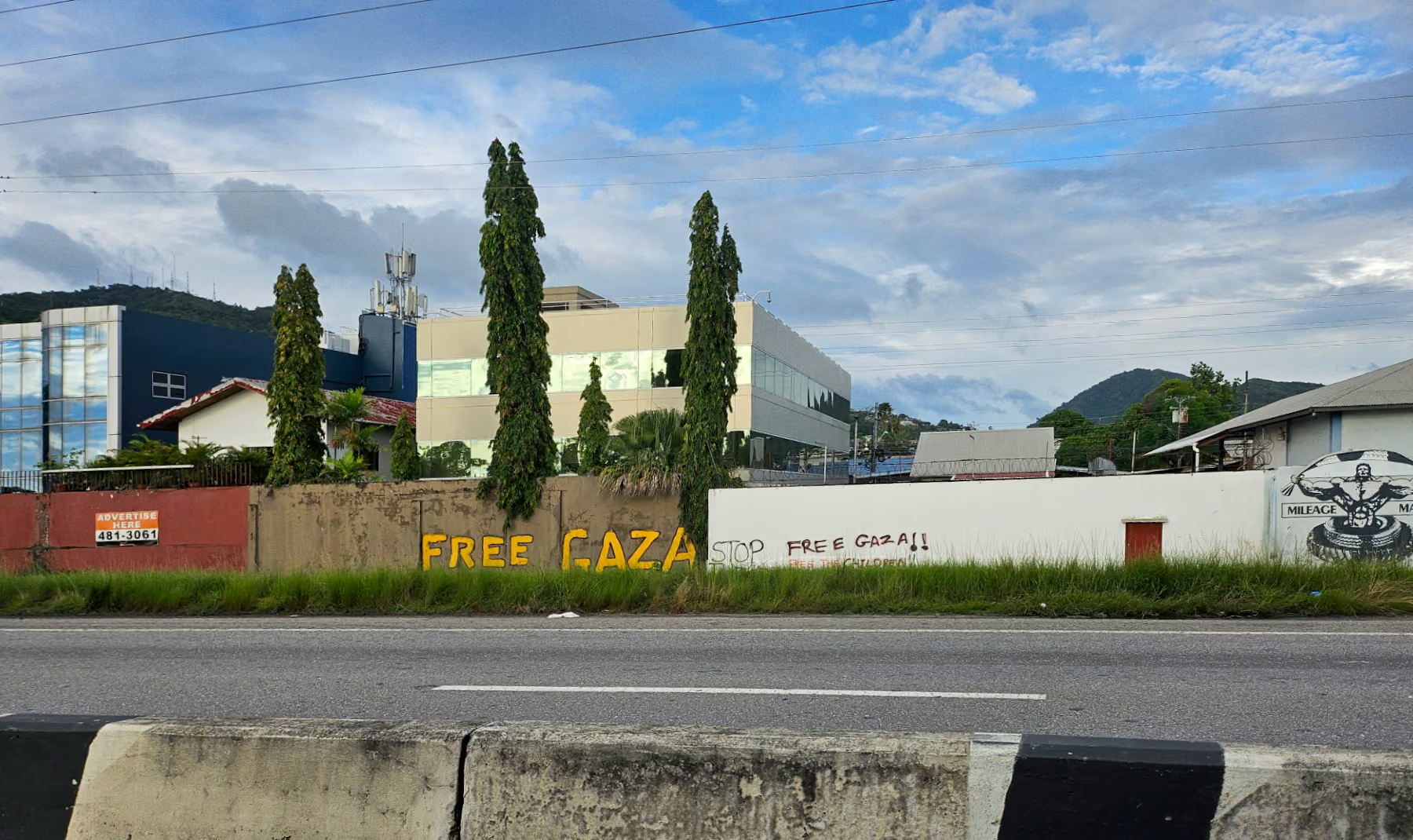
Murals have begun to bloom across the twin-islands, becoming more visible and more intentional as a form of expression. During the COVID-19 pandemic, Zinnia Li’s “Take the Jab Jab” transformed the public health directive by tapping into the ‘Trini’ cultural lexicon. The jab jab—trickster, fighter, survivor—becomes a national protagonist, battling against an evil and invisible foe. More recently, murals have appeared island-wide, with the words “Free Gaza,” painted in urgent yellow block letters edged in black. Together, these works reveal how paint on concrete can move beyond surface decoration, becoming a kind of public conscience: recording not only the artist’s position, but the island’s pulse at a given moment in time.
In my early to mid-twenties I started photographing hand painted signs. Over the years, I’ve had other preoccupations—including front doors, fretwork and wrought-iron design—but signs have remained a consistent love affair. For me, they hold the mythical power of linking past and present, and they are a central feature of local architecture and the islands’ cultural landscape.
Outsiders often refer to Trinidad as “the New York of the Caribbean” because of its industry, infrastructure, and myth-making tenor. Yet, despite this momentum, distinctive cultural pockets continue to assert themselves, quietly negotiating their own rhythm and aesthetics. Nowhere is this more visible than in the island’s bars, where hand-painted signage transforms walls and façades into vibrant intersections of local craft, commerce, and community identity. Here, the collision of corporate branding and artisanal expression create a unique site for the ongoing dialogue between global influence and homegrown creativity.
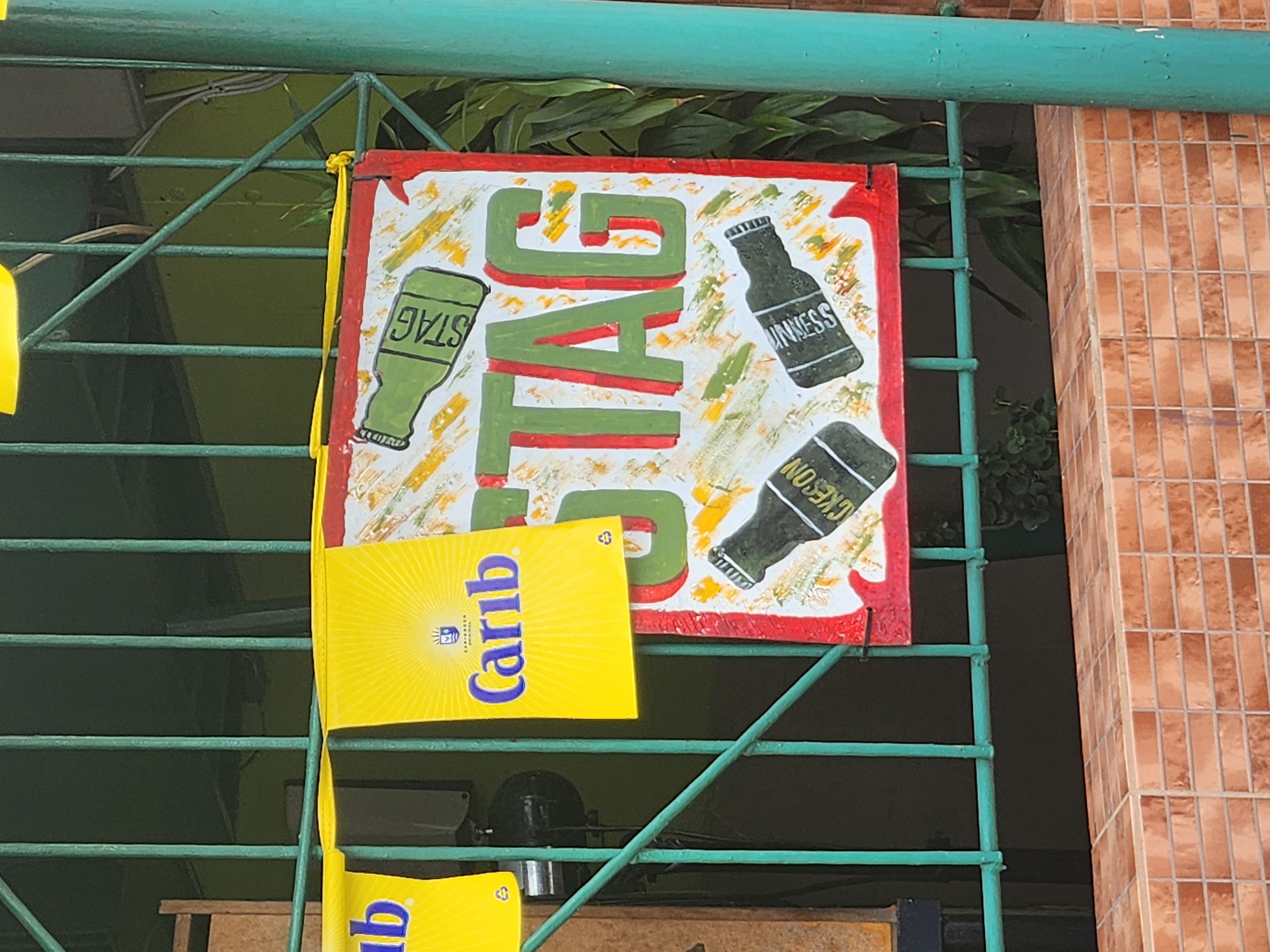
Outside of churches, one of the Caribbean’s most popular tableaus is that of the watering hole or ‘corner bar’. Part of their distinctive charm, outside of bright colours and imaginative names, is the conspicuous marketing sponsored by alcohol brands.
The resulting visual mash-up is not merely about ornamentation but a negotiation—where corporate aesthetics and local craft collide, producing spaces that reveal both the reach of capitalist influence and the persistence of community-based expression.
Across both rural and urban contexts, bar proprietors opt in for corporate partnerships, in exchange for branded kits including—refrigerators, coasters, ashtrays, bottle openers, and decorative items like the canopy streamers pictured above. Yet some bars choose to retain their autonomy by rejecting branded imagery altogether, while others blend it with other hand-painted art forms. The resulting visual mash-up is not merely about ornamentation but a negotiation—where corporate aesthetics and local craft collide, producing spaces that reveal both the reach of capitalist influence and the persistence of community-based expression.
For much of my twenties, I lived in both Gonzales and Belmont, on the outskirts of Port of Spain, Trinidad's capital. Belmont—rebuilt after the devastating 1808 city fire[1] and later incorporated into Port of Spain in 1899—has long been called “Freetown” by formerly enslaved Africans who settled there after emancipation. Once plantation lands, the neighbourhood evolved into the city’s first suburb, populated by working-class and black professionals who built humble, yet elegant, gingerbread-style homes that earned it the nickname “the Black St. Clair”, after the historically affluent area. Though still controversial as a high-crime area, Belmont is widely recognised as a hub of cultural innovation: the birthplace of Carnival designers, steelbands, calypsonians and influential community figures of global stature, including Wayne Berkeley, David Rudder, The Mighty Shadow, Kwame Ture, Claudia Jones and Horace Ové to name a few. And so it is within this tradition that I frame my musings.
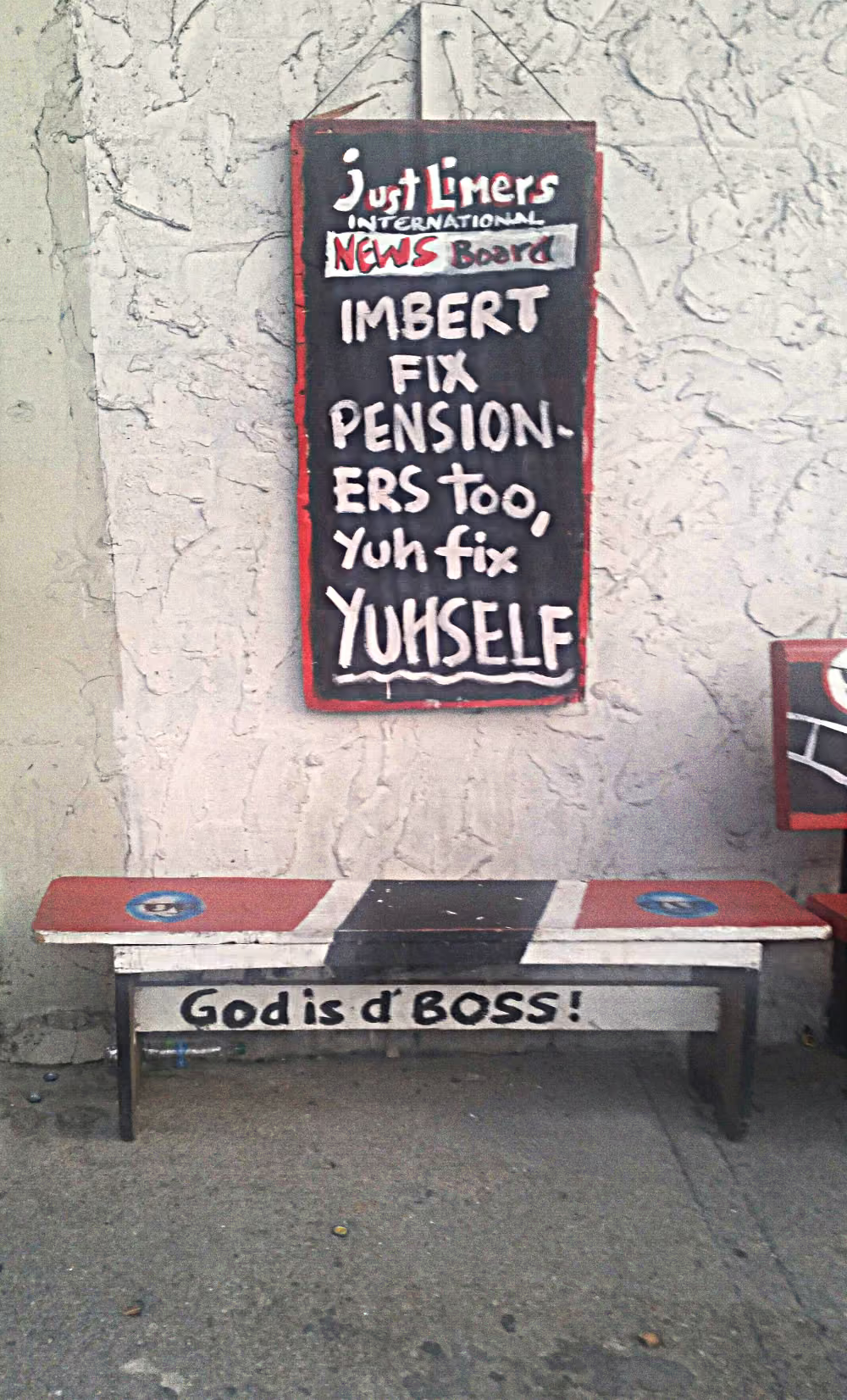
Every day on my way to work I passed a corner adorned by a painted noticeboard of “Just Limers International,” which changed regularly with fresh paint and even fresher messaging. Its colourful panels served as a dynamic bulletin of local politics, spiritual exhortations, and public reminders to keep a clean scene. “Limer’s Corner”—as I dubbed it—felt more authentic than any of the community building exercises or interventions I had been exposed to and even within my capacity as an enthusiastic observer, I felt like I was a part of something just by walking by. The ritual of rotating artwork transformed the space into a local(ised) institution of collective reflection—where image, message, and movement were part of a fluid exchange.
The corner also echoed another era of street-level participatory discourse, which took place in the heart of Port of Spain, at the “University of Woodford Square.” The decades between the 1930-70s were formative to the nation-building project (pre and post Independence) and represented a highly generative period for public intellectualism. TT’s first Prime Minister Dr. Eric Williams delivered many of his early political speeches[2] at Woodford Square, as did National heroine Elma François[3] and many others.
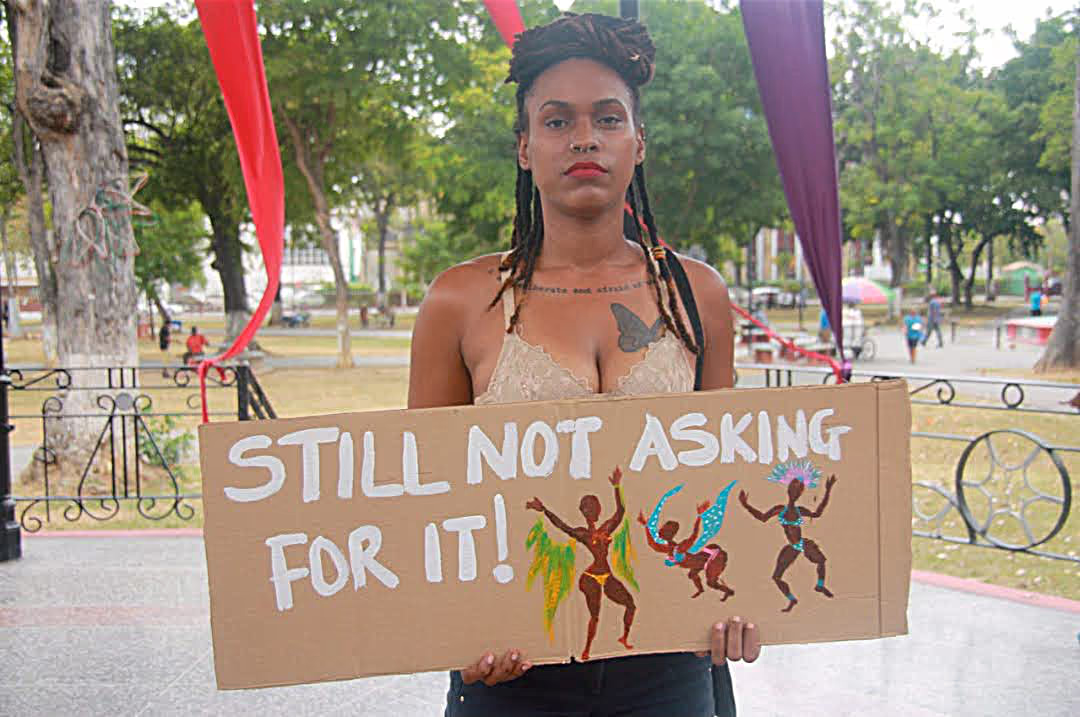
In my own trajectory as an activist, I have occupied space at Woodford Square, an historic site where sign-making has long been central to protest. My comrades and I gathered there for the Don’t be Vulgar, Mr. Tim Kee[4] demonstration—an exercise in collective authorship that allowed us to craft and refine our messaging. As pictured, the text mobilized a popular feminist refrain to contest the entrenched discourse of victim-blaming, while the stylized depictions of masqueraders anchored the message in a Carnival-inflected cultural context and engaged ongoing debates about women’s bodies and autonomy.
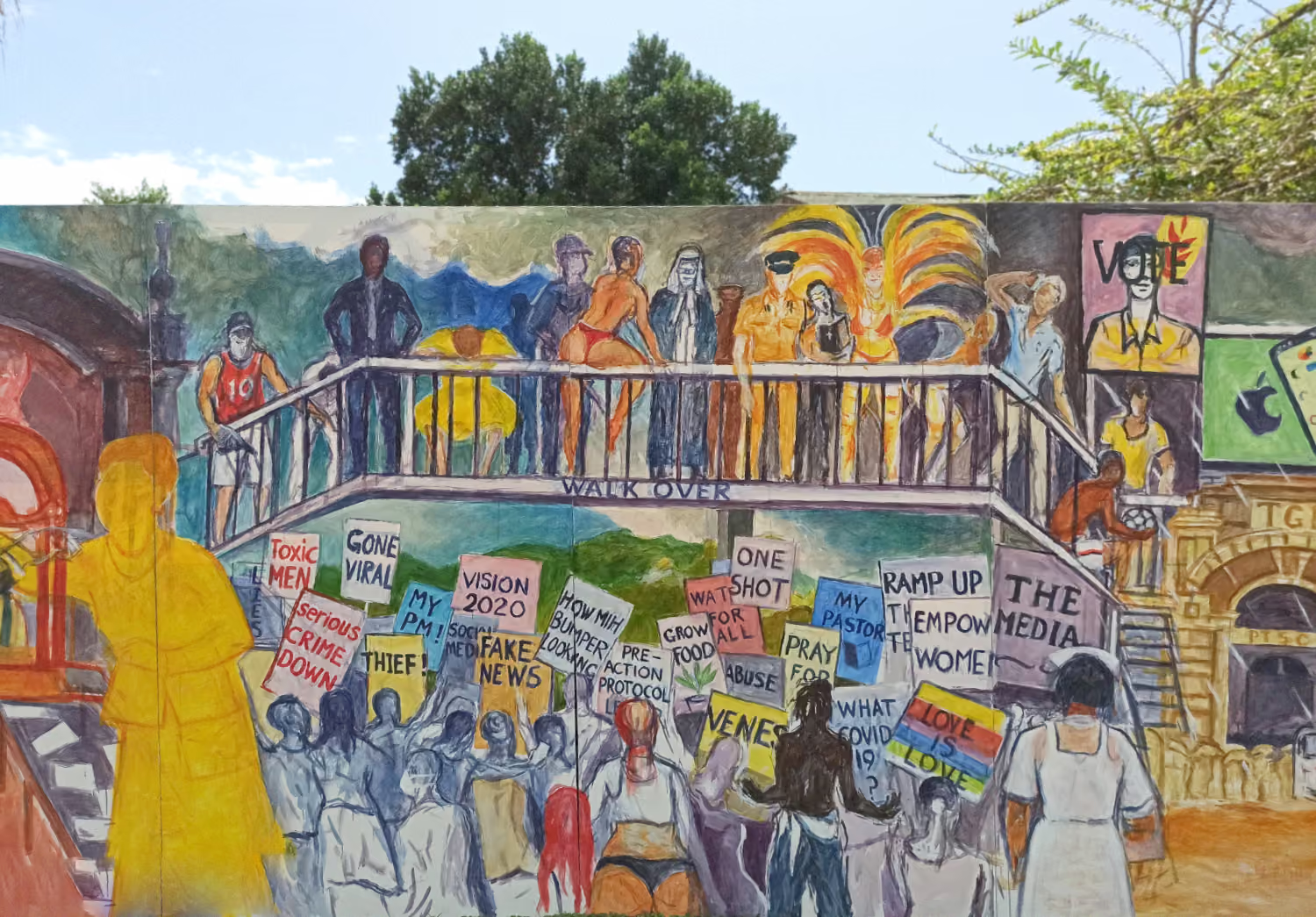
Hinkson not only affirms the protest sign as an indigenous aesthetic form but also incorporates it into the national cultural archive.
And while our signs were created for an immediate political purpose, their resonance extended beyond the protest itself. They entered Trinidad’s broader visual culture, where artists also grapple with the interplay of Carnival, politics, and public space. Master water-colourist Jackie Hinkson’s recent murals make this continuity explicit: among his scenes of Trinidadian life, he depicts characters holding hand-painted protest signs, including women in costumes at Woodford Square. In so doing, Hinkson not only affirms the protest sign as an indigenous aesthetic form but also incorporates it into the national cultural archive. His work shows how a spontaneous act of resistance can become part of the visual language that shapes collective memory.
In preparation for this essay, I had the pleasure of interviewing a central figure in sign-making—Bruce Cayonne, also known as The Sign Man[5]. A living giant of the craft, Cayonne began painting signs in 1986 (the year before I was born—don’t do the math!) and rose to national prominence in the 1990s with his introduction of the ‘fête sign,’ which he developed while moonlighting as a party promoter. At the height of his career, long before digital marketing took over, he made up to five hundred signs for a single event.
Cayonne recalls that his designs were unprecedented at the time, from his signature colour-blocking gradients to his distinctive lettering and typography. And though copycats now attempt to replicate his work, Cayonne takes a more relaxed view of intellectual property. But with the help of graphic designers Kriston Chen and Agyei Archer, the fête font was partially digitized in 2016—carrying its hand-painted spirit into new forms of cultural expression.
Hand-painted signs endure because they do more than advertise: they tell stories, claim space, and archive the lives of ordinary people.
The Sign Man may have built his reputation in party promotion but his legacy now stretches far beyond that world. Today, there is a growing market for alternative commercial ventures and personalized designs, often commissioned as gifts or collected as keepsakes. In the images below, ROASTEL COFFEE showcase their Christmas brew with his signature fête style (L), and a vendor at the Santa Cruz Green Market displays a limited-edition sign created to commemorate International Women’s Day (R). Together, these works testify to how hand-painted signs endure—not only as tools of commerce but as living archives of cultural identity and resistance.

And finally, I wanted to reflect on the ways hand-painted signs have surfaced in my own creative practice. I wouldn’t call myself an artist, but I occasionally experiment with making things. To shake off my COVID slump, I joined a miniature-making workshop and created a tiny model house I called Lot 2. What surprised me most wasn’t the house itself but the little “For Sale” sign I painted to accompany it—a gesture so small yet so telling. At the time it felt playful, even whimsical, but looking back I recognize how instinctively I turned to the language of signage to complete the piece. Even in this modest form, the sign became more than decoration—it carried meaning, context, and narrative.
To me, this small act affirmed how deeply embedded hand-painted signs are in the Caribbean imagination, shaping not only public space but also how we express ourselves in unexpected and intimate ways. Maybe it was coincidence—or maybe it was my love for this art form finding its way from my psyche to the paintbrush.
Hand-painted signs endure because they do more than advertise: they tell stories, claim space, and archive the lives of ordinary people. Whether towering over Woodford Square or tucked into a miniature house, they insist on being seen. That insistence is itself a politics: a refusal to disappear, a claim to space, a record of who we are.


.png)