.png)


A motorbike passes by; a house is under construction nearby. In the distance, Romeo Santos plays sweet or melancholic bachata, depending on how you choose to hear it. “He needs no love in his life,” he says out of pain, and it depends where on your journey you are to form your own opinion of those words. Sound is inevitable, and in this piece, we approach Santo Domingo’s urban change through its sounds, using listening as ethnographic method. This framework draws from Édouard Glissant’s Poetics of Relation, which understands Caribbean life as something formed only through constant encounters: between histories, neighborhoods, languages, silences, and noise. Listening, in this sense, is not passive, it becomes a way of sensing how fragments come together, and how everyday sounds hold memory, conflict, improvisation, and possibility all at once. This is a knowledge rooted in lived experience, in the rhythms and pauses that give the Caribbean its texture.
From this perspective emerges the concept of the field DJ mix as a method for urban listening. The city is a tracklist: its engines, voices, and weather blend into a layered composition, a mix built from whatever arrives, nothing scripted. The act of recording and re-contextualizing reveals historical and cultural undercurrents that are ever present but often unnoticed in the everyday auditory landscape. Here, Glissant helps us understand that sound is part of how people know, remember, and navigate the city, and then we understand how the city changes through shifts in what is heard and where it’s heard.
So we listen again: birds chirping, Romeo still insisting on melancholy (and we love him for it), thunder mumbles something; the house keeps rising, hammer striking wood. What does the one holding that hammer hear from this distance? The highway hums with the wind, joined by the hushed yet present neighborhood ambience. What is there for us to find in these sounds?
This is a middle-class neighborhood in San Isidro, Santo Domingo Este, perhaps upper-middle judging by the size of the houses. Built to be spacious and set apart from the city’s core, the area carries quiet confidence even if class in Santo Domingo can sometimes be spatially fragmented: neighborhoods are divided into informal “sections,” shaped by incremental construction, migration, and opportunity. Within a few blocks, one can move from carefully planned homes to more modest dwellings, revealing the non-linear, improvisational character of urban growth. In this particular section, music plays, but never too loud.
San Isidro, overall, holds a certain silence that has a history. It has been expanding from the various neighborhoods that emerged near the country's main military base: Their presence today echoes the systems of domination that continue to linger years after Trujillo’s assassination in 1961. His grip had been so deep that his legacy planted roots in the country that would forever grow on with its development, a government structure that not only shaped minds but geographies: Many who once held military or political influence sought a quieter life on the Eastern side of Santo Domingo (officially named Santo Domingo Este since 2001), buying green space away from the center but connected enough in a way that would later attract new residents for its affordability. Land turned into homes; homes turned into neighborhoods; neighborhoods layered with varying kinds of wealth: military pensions, political legacies, business ventures, and sheer luck.
In 2025, this history sounds like birds, construction, and Romeo Santos drifting in the breeze: a quiet soundscape that sits somewhere between working-class and middle-class life. But beyond this stillness, the historical core of Santo Domingo — the National District — vibrates at another frequency: denser, faster, and economically louder. That is where public transport comes in, already audible in the highway’s drone, carrying people, music, and stories into and out of this stillness, mixing together the city’s core and Santo Domingo Este’s quieter atmosphere.
STILLNESS IN MOTION: TO LISTEN TO THE CITY AS YOU MOVE
Every city has its soundtrack, and Santo Domingo’s signature may rest in merengue, bachata, and the streetwise swagger of Anuel: a voice and flow you can find at almost any corner in La Duarte or spilling from passing cars. These are not just background notes; they are ethnographic markers. In 2025, listening closely is the method: to read the city through its sound as one might through its textual archives.
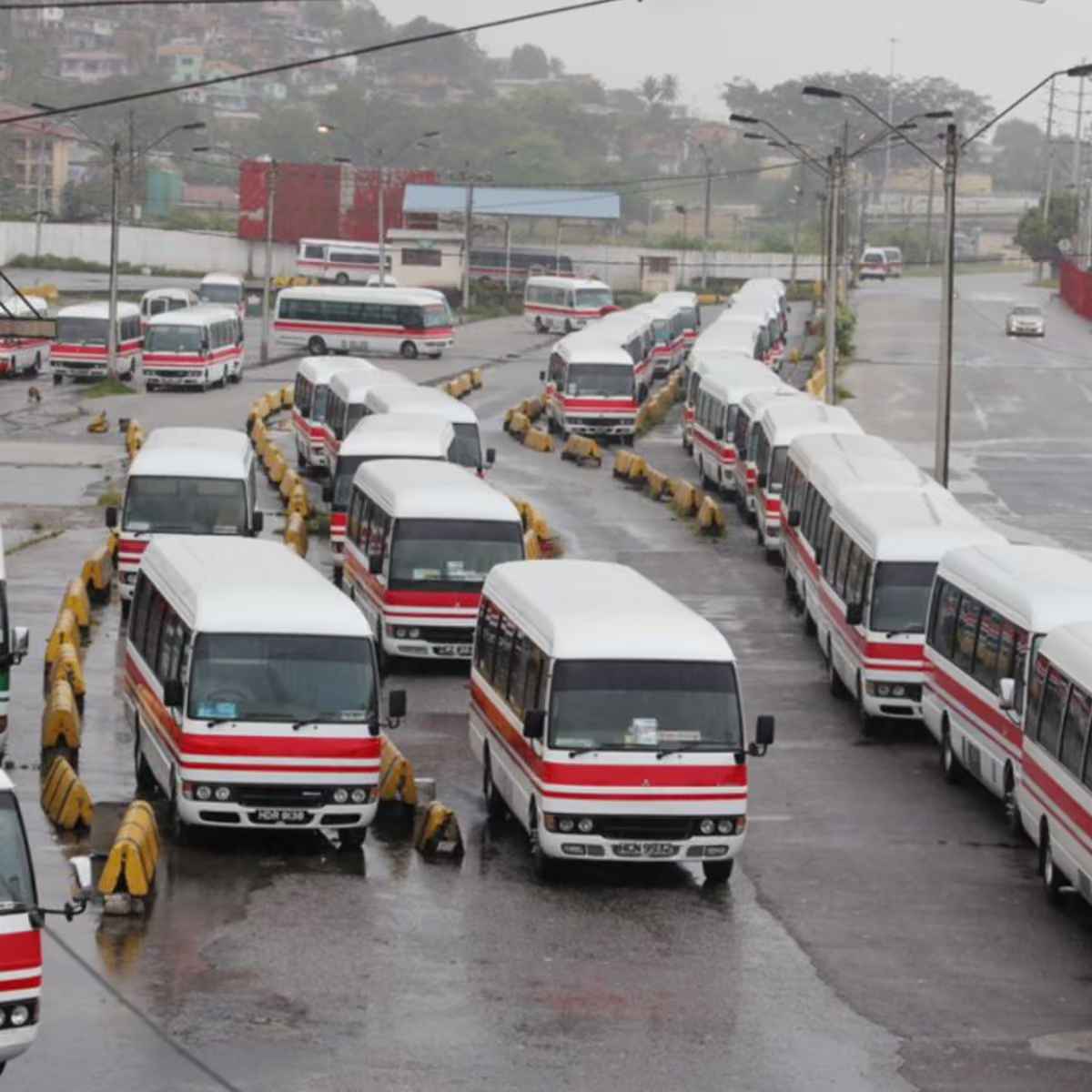
Today, public transportation in Santo Domingo is the result of decades of multiple processes in response to the need for transportation routes for a rapidly growing city, which has led to a complex urban mobility network characterized by a high rate of privately owned vehicles and routes controlled by drivers' unions with irregular fleets. Public cars and guaguas (the common slang for buses) are born from this.
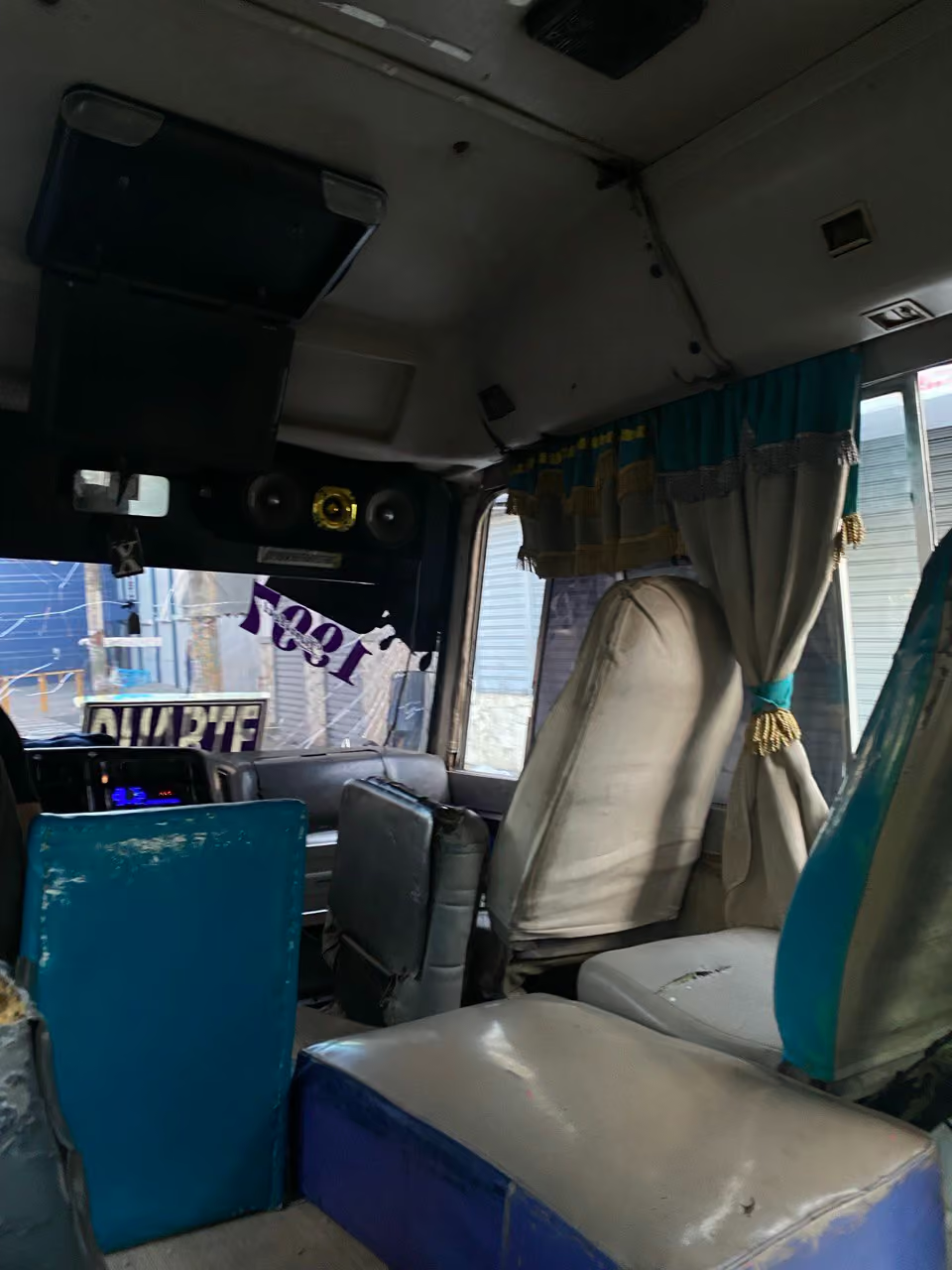
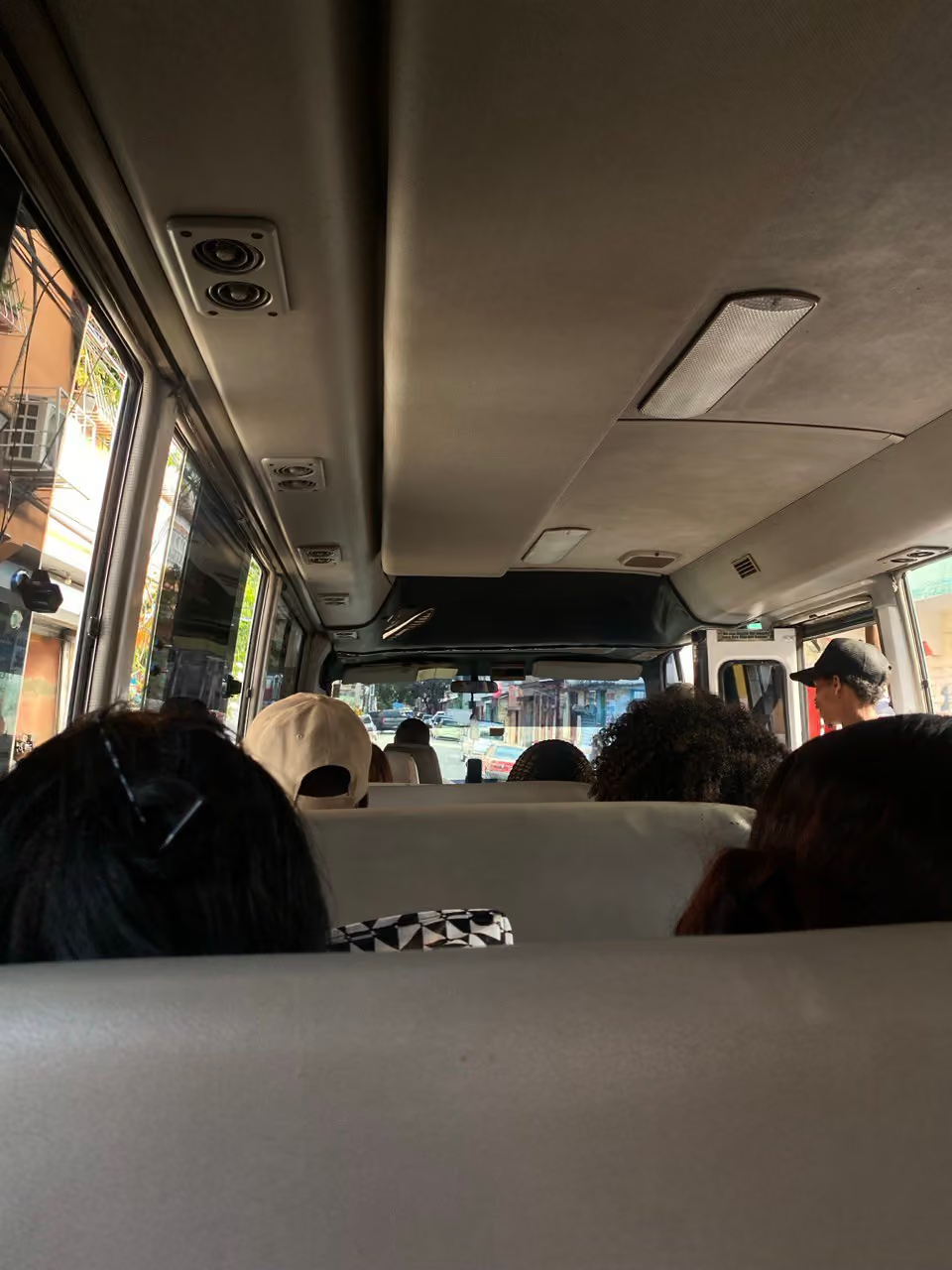
If you board a guagua, let’s say from somewhere along John F. Kennedy Avenue toward Juan Pablo Duarte Avenue (La Duarte), the first thing you notice is the sound. It begins with the tired engine, then the sharp calls of the chofer or driver, sometimes joined by a cobrador, whose job is urging people to squeeze in and then collecting the transport fee. In some guaguas there is no cobrador; in others, the driver is more focused on the playlist than the hustle. A trap beat drops and, for a moment, the guagua transforms: “get in, the Bugatti is here,” the driver jokes. The vehicle becomes both ordinary and extraordinary at once.
This stance of the driver is a kind of tíguere-lite philosophy: moving with style, knowing the street’s tempo. What is a tíguere? Spend time with a few reggaetón, rap and dembow songs to get an idea of what it looks like and its nature. Luckily, in this mix we have the Puerto Rican flare of Myke Towers, Bad Bunny, Ozuna, Anuel and more as guides to understand this elusive philosophy a little better with their performance, ever present in the Dominican streets. Glissant's Poetics of Relation once again helps us understand how city, history, music, sound, chofer, tíguere, guagua, the passenger’s own stories and more all circulate together. They remain distinct and sometimes opaque, yet they form a shared rhythm. Listening lets us sit inside that relation.
Like a DJ, the chofer and the city shift tracks without warning. History overlays itself on the route: John F. Kennedy to Juan Pablo Duarte, a reminder of U.S. influence on the country’s economy and development throughout the twentieth century and, further back, the independence movement led by Duarte himself - all contained within the space of a single fare. That's the exact "musical formula" that may hold together the Dominican Republic and the Caribbean, internal and external forces colliding and deciding where will the mix go next, with the guagua carrying those relations across the city.
Traffic on John F. Kennedy Avenue, one of the busiest and most fundamental routes for urban mobility in the city of Santo Domingo since its beginnings in the 1960s. Named as a gesture towards the diplomatic relations between the Dominican Republic and the United States.
Guagua routes in the Dominican Republic began as independent operators who built their own informal systems, like self-governments, using old but functional vehicles to move people from point A to point B. Their charm lies in the casual, improvised, and community-based way they operate, making them a distinctive presence on the streets.
Passengers ride quietly, waiting for their stop. Around them, the economic wheel turns: debts, rents, remittances, vacations, illnesses, children, aging parents. The guagua holds these stories as surely as it holds the bodies it carries across the city. Outside, Caribbean greenery breaks through concrete, and the sea’s nearness decides the day’s weather, and with it, the city’s mood. Riding a guagua, walking, and perceiving are never neutral here; they brush against layers of sovereignty, colonial memory, and Caribbean complexity.
Your regular Juan Pérez (or regular Joe) is also a witness to these layers. He might live in Santo Domingo Este and ride a guagua to get home from work, stopping around La Duarte on a hot summer afternoon before catching the next route toward his neighborhood.
La Duarte, a point of convergence for the city’s many threads, knows this story. It blasts its many voices and beats over and over: “Come shop!” “Here’s your ride to your next destination, get in!” “What are we buying today? Where’s the cheapest option?” “¡A diez, a diez, a veinte!” “Where are we going next?” “¡Chips de Claro!” “What’s our mission for today?” All of it is key to placing you exactly in this spot. Music may and will blast from many sources.
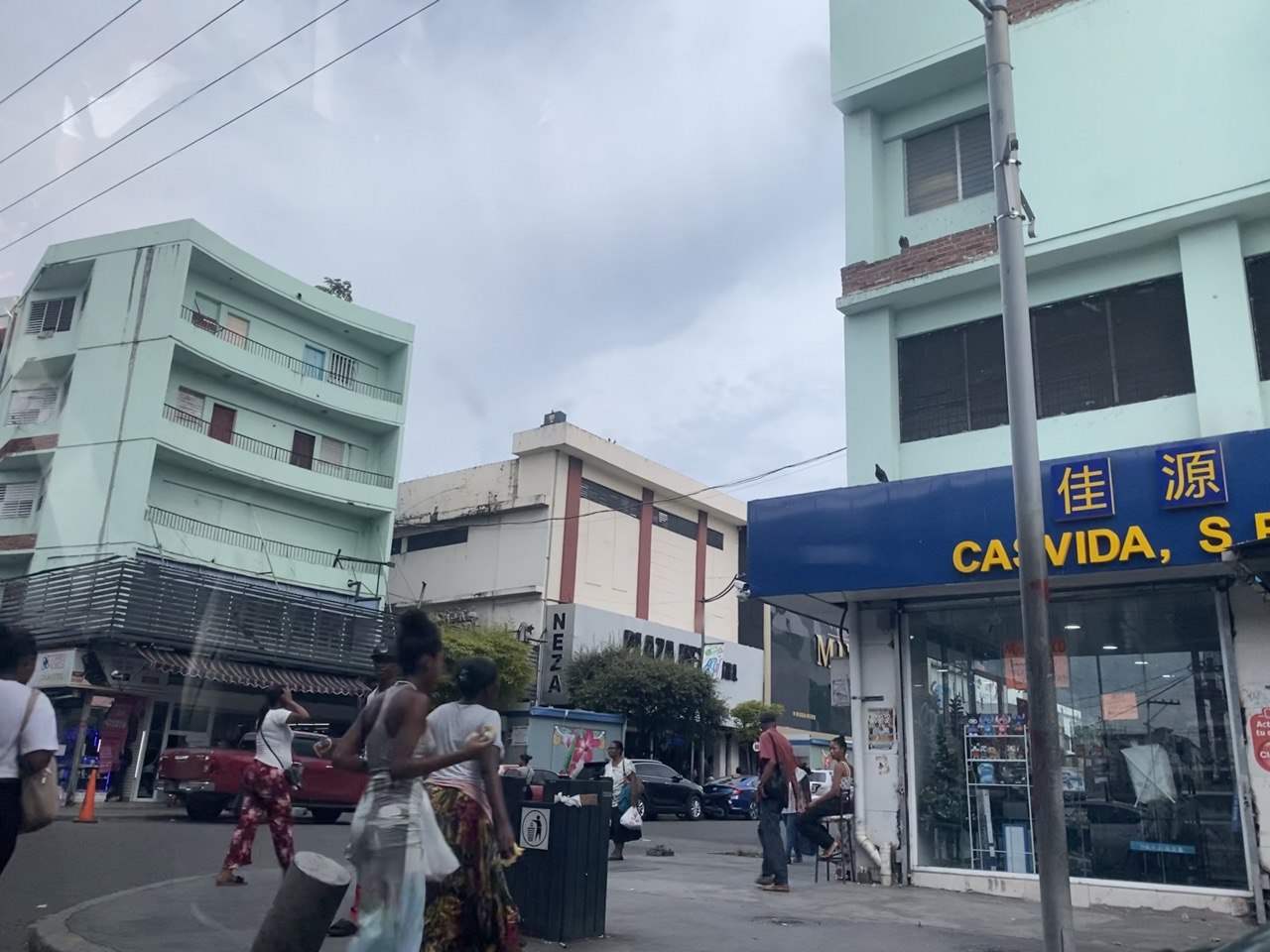
As we step further into listening, we let each voice and sound carry their own story into the mix and away. We are witnessing a DJ mix in the hot stillness of an afternoon. We hear the layers stacking and try to understand their depth right before we let go onto the next.
A city like Santo Domingo is built on improvisation. The streets teach this lesson daily: vendors appear with cold water bottles in the heat, then with umbrellas and raincoats as soon as the weather changes to rain. These economies of quick response mirror the improvisational flair of the city’s infrastructure as it developed: sometimes improvised, yet enduring. Within this rhythm, the echoes of a European inheritance coexist with the later arrival of a cosmopolitan American vision, both colliding in the present-day pulse of commerce.
La Duarte became a commercial lung as soon as businesses began to cluster there, attracting larger stores alongside countless vendors who followed the flow. It remains central: the place where routes converge, where you travel to the interior of the country, and where the soundscape of Santo Domingo really thickens. The vendors’ calls, the guaguas idling and shouting their destinations, the layered music from nearby shops: all of it folds into the mix, each detail another node in the circulation of goods, money, and survival.
Movement around La Duarte from inside one of the stores in the area. A space of convergence between music, transport routes and high mobility.
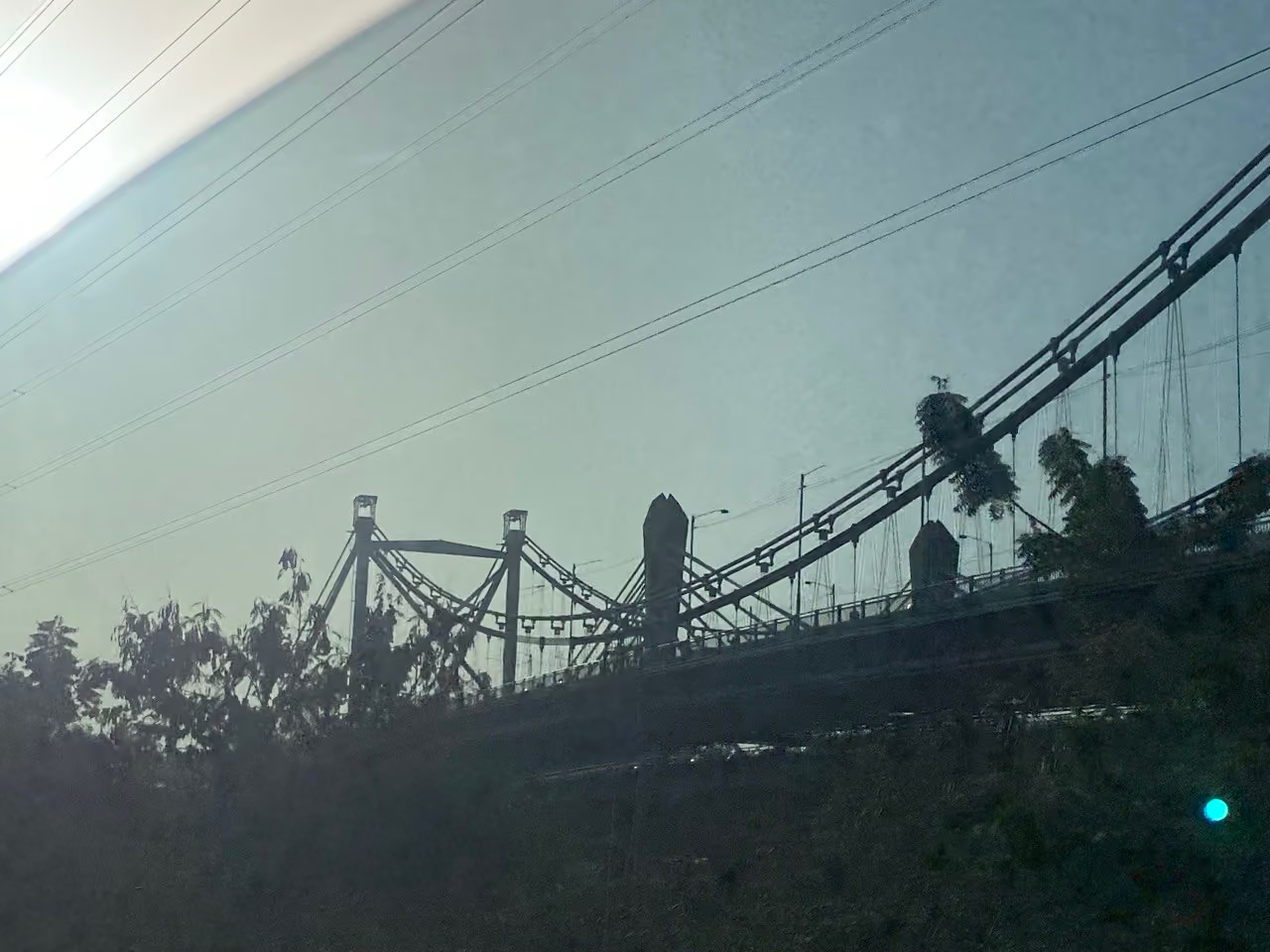
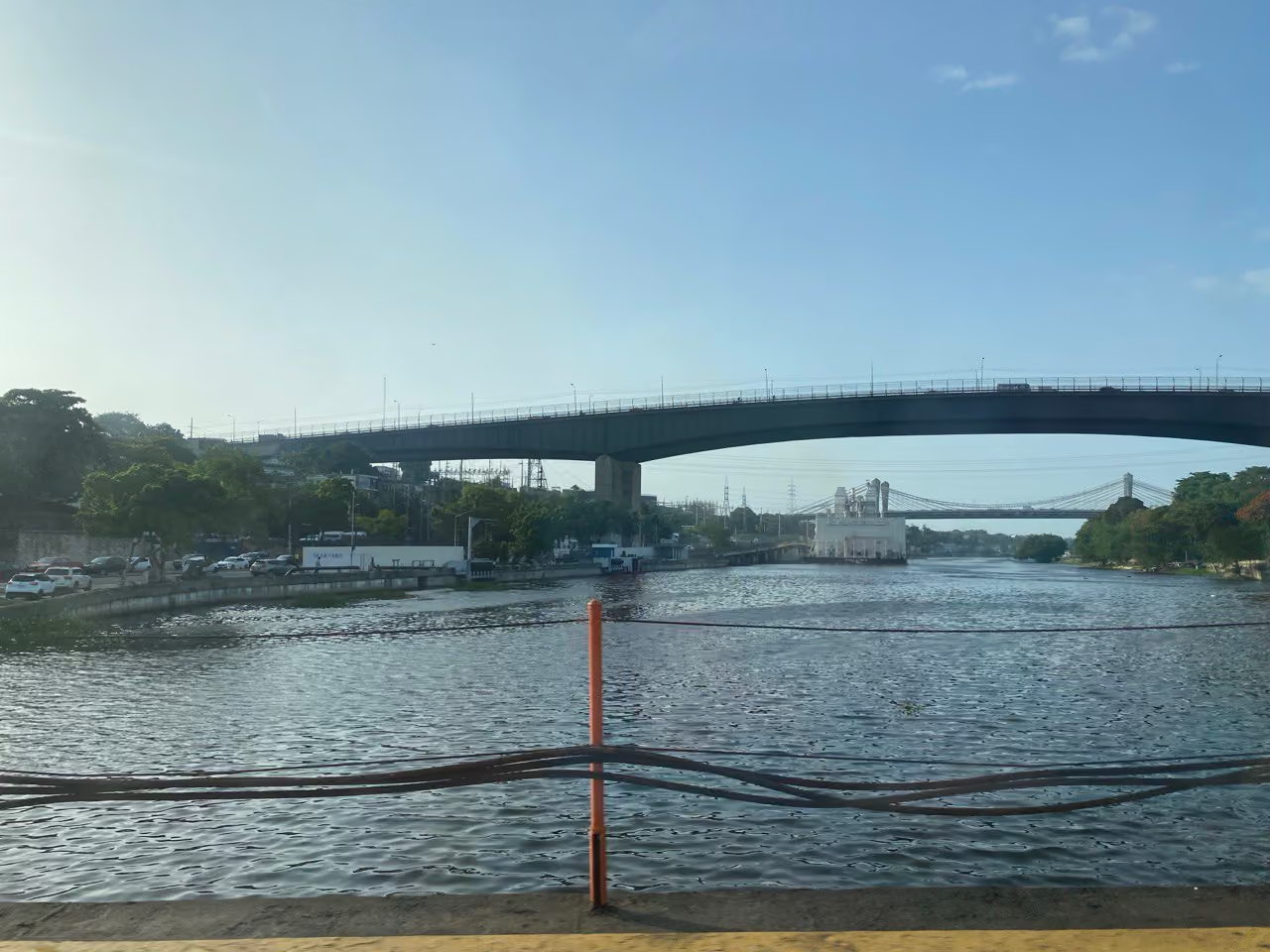
As the mix ends and your regular Juan Pérez makes his way home, La Duarte fades behind as we cross the bridge back into Santo Domingo Este, where the city’s commercial and residential growth takes on another shape. The neighborhoods unfold: each carrying its own rhythm, its own economy, its own histories of power. Military pensions, political favors, dictatorship’s residues, corruption’s dividends, business ventures, and the occasional stroke of luck: democracy here comes in many shades.
Each space is defined by its silence, or its refusal of silence. We’ve explored how it sounds around San Isidro, but in places like Los Mina, the soundscape refuses to withdraw in a way many outsiders would simply call “noise”: Speakers compete with traffic and conversation, but in that layering you can hear the present and future of Dominican rap, dembow, and trap, and the long history that brought those sounds into their current worldwide recognition. That noise is merit: an audible claim to presence. Los Mina carries a long history of settlement within Santo Domingo Este, tied to migration, labor, and people searching for space to live beyond the colonial core. The now famous “La 42” scene at El Capotillo, a not too far neighborhood at the Distrito Nacional, shows how creativity can grow in conditions that urban policy often calls informal. Many Dominicans might dismiss these areas because of their grit and their “bulla,” yet listening closely reveals the intelligence of improvisation that keeps the city moving.
Other neighborhoods in Santo Domingo Este hum differently. Their quieter sounds often signal the slow layering of mortgages, remittances, small businesses, and long-term waiting. Compared to the colonial center, where the city’s growth historically began, this side of the capital still feels like it is assembling itself in multiple directions at once, construction site by construction site. Some projects gesture toward the aesthetics of places like Mirador Sur or the Malecón from the Distrito Nacional, both emblematic and rich in the way they’ve become an attraction for citizens and tourists to enjoy because of the constant care the local governments have destined into them, the Malecón on Santo Domingo Este seems to be receiving this care as of late. While other public spaces can evolve slowly and unevenly, sometimes opening opportunities, sometimes producing gaps. Change here is not linear, and it shifts just like sounds through a mix.
Recently, a tourism-focused rebranding gave this area a new identity: “Santo Domingo Este: Costa del Faro”, drawing from the Faro a Colón, which is one of the largest monuments on this side of the city that anchors its landscape. The choice resonates because of the local government’s interest in highlighting the identity that holds Santo Domingo Este: the bridges, the greenery around the lighthouse and the quiet hum of this side of town form a distinct sound ecology. It also marks a step towards further opportunity and growth in the public space for the citizens to enjoy. But growth means more circulation, more morning and evening commutes, more thousands moving in guaguas, public cars, and private vehicles. With them travel the soundtracks of Anthony Santos and Anuel, Bad Bunny, dembow, bachata and more. Sound glows both in its presence and in its absence, writing the story of a city that is still, always, in motion.

.png)