.png)


.png)
THE CITY THAT DOESNT HEAR:
On my first day as a Spanish interpreter for the immigration division, I was sent to Port of Spain General Hospital in Trinidad’s capital city. A Venezuelan woman was there, undocumented and doubled over with severe abdominal pain, and she needed to be told in her native language that the moment she crossed the hospital doors, she would be required to report to immigration for processing and likely deportation. I rehearsed my script on the way over so the words would feel less foreign leaving my lips.
But when I arrived, I found her writhing in pain as her husband attempted to explain her symptoms. With each stammered word, I watched his fear thicken while the nurse’s patience thinned. I stepped in, interpreted for him, and within fifteen minutes she was receiving treatment. He thanked me even after I explained why I was really there. “I bring her to office when she better,” he promised.
Throughout the following year of my contract I learned that this was not an isolated moment. This was daily life in a city that has become multilingual but remains monolingual in its institutions, with no effective state interpreter system to facilitate the mass migration of the past decade. From hospitals to prisons, detention centres to government offices, to holding cells and police station waiting rooms, I had a front-seat view of the failures of the state to protect and serve all who live within its borders. These have become deliberate barriers that are creating a silent and devastating crisis of structural exclusion.
However, language exclusion in the Caribbean is not limited to migrant communities. Many citizens remain invisible in civic life because of longstanding gaps in interpretation for the disabled and for those whose first and only language is Creole or Patois. When alternative modes of communication are overlooked, entire groups are effectively cut off from public services, economic participation, and the possibility of independent living. Trinidad and Tobago’s recent shift towards amore assertive foreign policy in line with U.S. security priorities risks entrenching these barriers. As the state directs greater attention to cooperating with larger geopolitical partners, domestic investments in accessibility can and will lose urgency. This moment calls for a careful rebalancing: language access must remain central to how the nation defines inclusion, even as its diplomatic posture shifts. Strengthening language infrastructure is a way of ensuring that new foreign policy choices do not inadvertently deepen the silence around those already unheard.
THE GREATER CARIBBEAN'S MULTILINGUAL URBAN PRESENT:
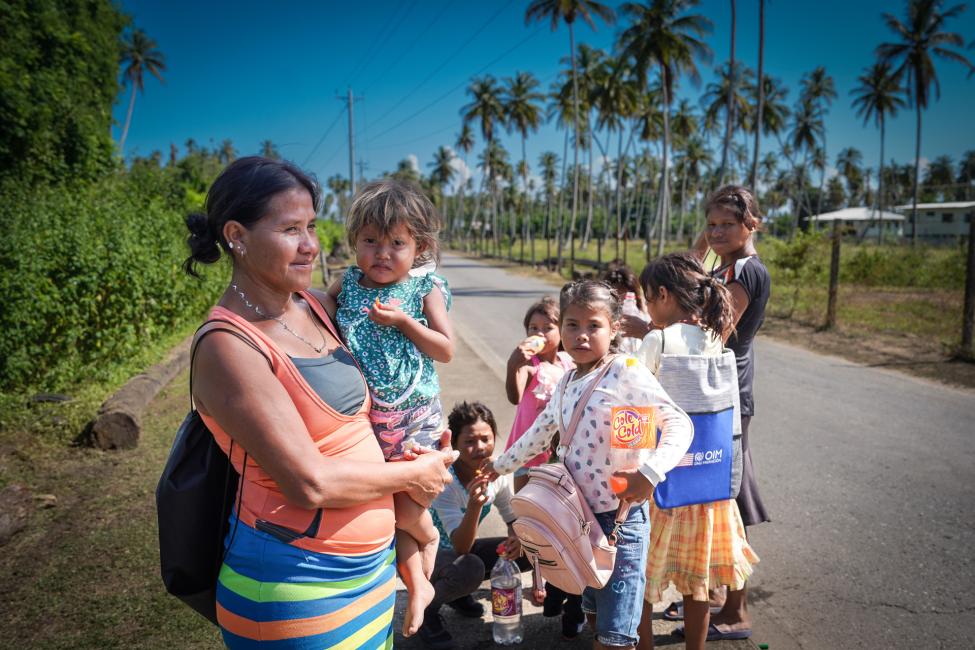
On paper, the Greater Caribbean has always been multilingual, a place where the rhythms of different tongues have collided across centuries. However, in the last decade, our cities have been reshaped by a new tide of migration that is quietly altering the reality of who moves through our streets and sits in our waiting rooms. In Trinidad alone, tens of thousands of Venezuelans have arrived seeking safety[1], many with children in tow, navigating daily life in a place where they do not speak the language. As of late 2023, estimates put the figure at roughly 45,000 people[2].
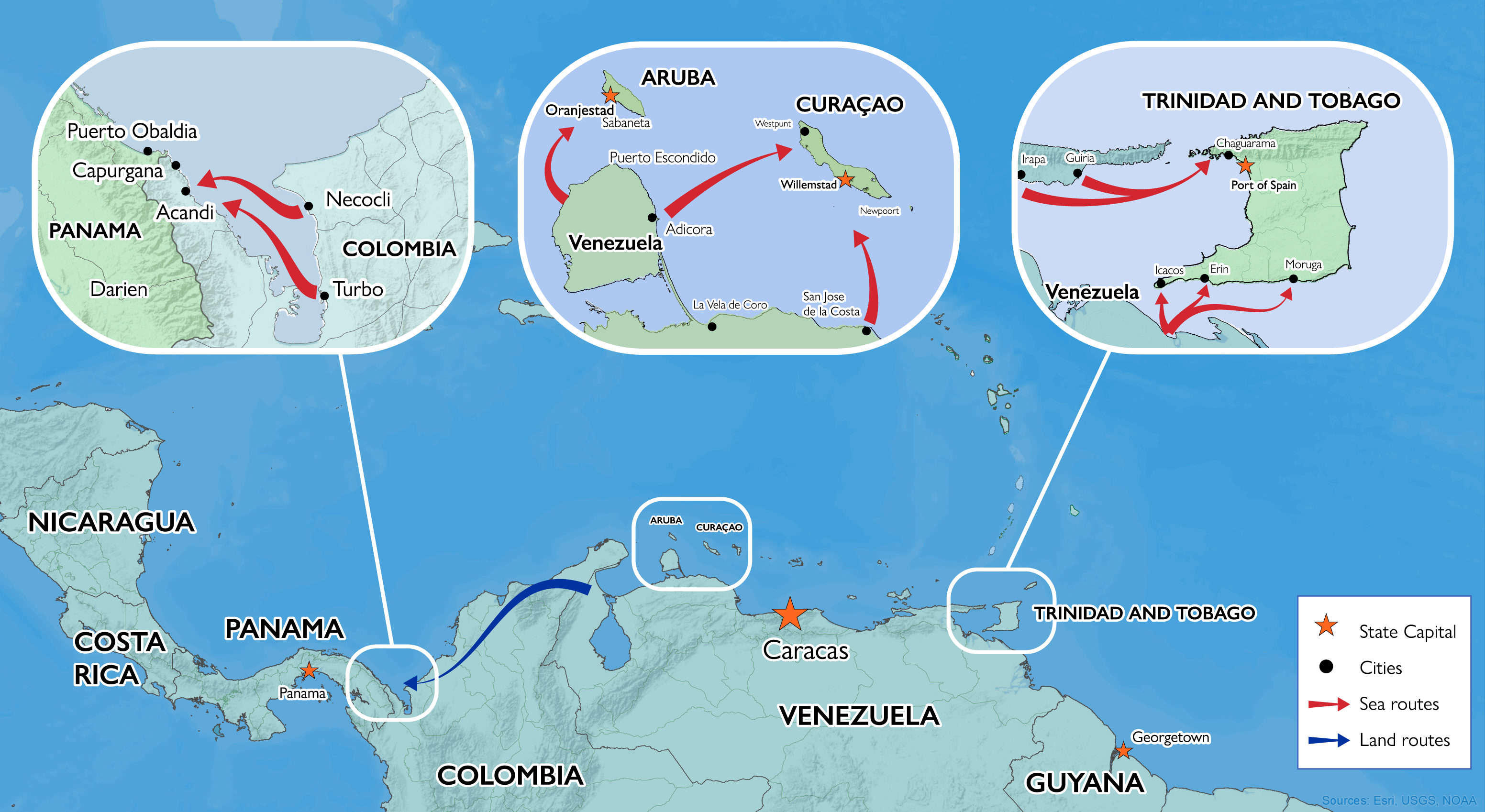
To the North-West of the archipelago, in the Dominican Republic, rigid deportation campaigns continue even as Haitian women cross the border to give birth amid their native country’s collapsing health system[3], in turn raising urgent questions about rights-compliant access to care and interpretation.
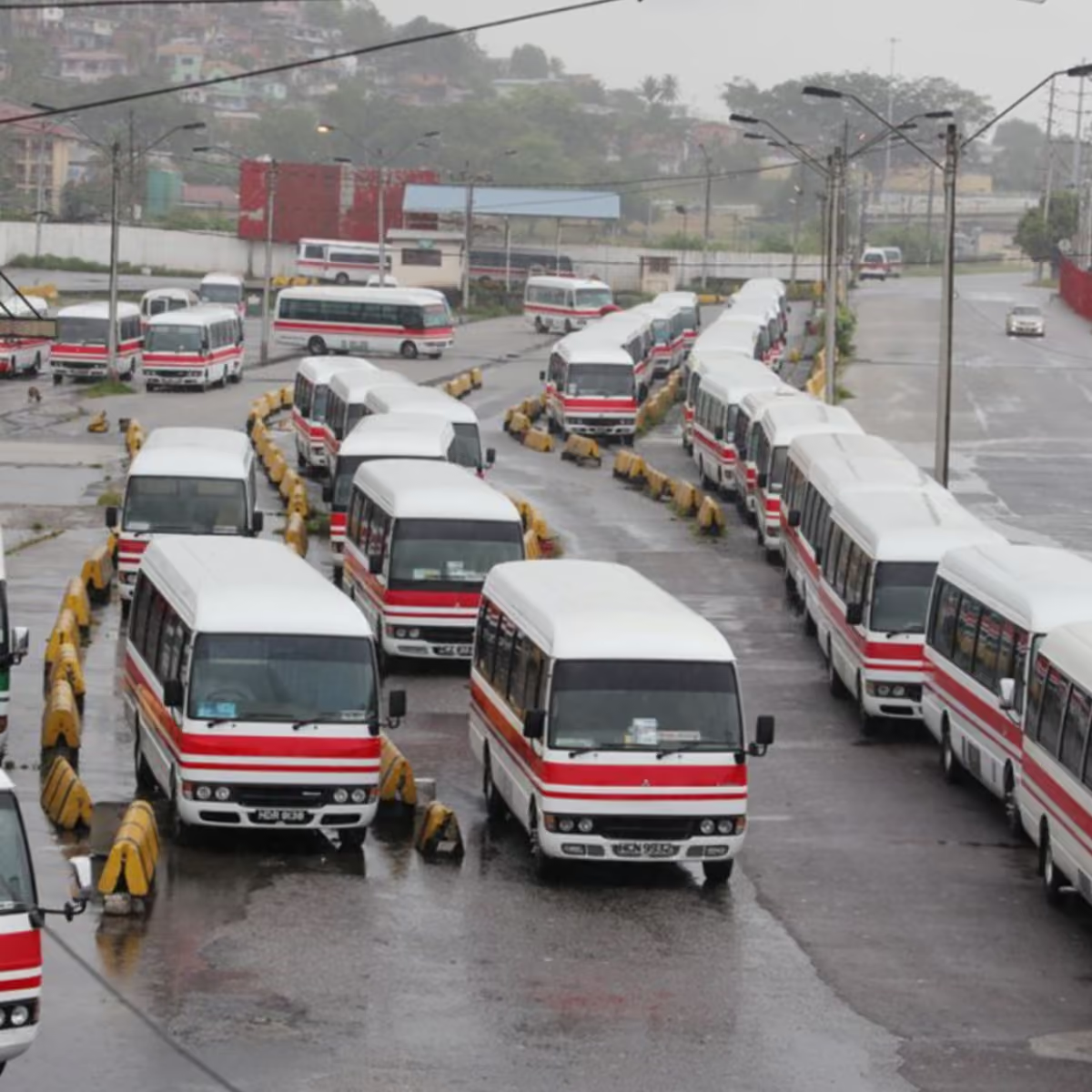
Yet even as our urban spaces have become polyglot, our social systems remain stubbornly monolingual. Public hospitals operate with forms and signage in English only, with frontline workers relying on goodwill and Google Translate; courts assume comprehension of legal jargon delivered in rapid-fire local dialect; bus and taxi routes are announced in a language many cannot understand. These dynamics underscore an often-overlooked reality: English, the official language of administration, is in practice a second language for many residents. For speakers of Creole, Patois, and other vernaculars, navigating healthcare, legal, and civic systems requires constant translation and interpretation, rendering what is assumed to be a “common language” far from universal. The assumption that everyone speaks, reads, and comprehends the same language is a stark relic of colonial systems, buttressed by the geographic and social hierarchies that shape Caribbean life. In many places, those closest to centres of power are presumed fluent, while those farther from them (whether it be migrants navigating a new city, rural Creole speakers in an urban clinic, or deaf citizens in an unfamiliar public space) are expected to overcome these structural barriers on their own to simply survive.
We often talk about electricity, and roads as the essential infrastructure of Caribbean cities, but language is a form of infrastructure too. Without it, it becomes impossible to access healthcare, legal protection, work, and safety. Without it, the city itself becomes a maze of dead ends, its services accessible only to those who are already seen and already heard. And for those living in linguistic limbo, the simplest tasks such as getting a prescription, filing a report, asking for help, become sources of fear and quiet frustration.
THE HUMAN COST OF MISUNDERSTANDING:
Think of the systems we take for granted. A hospital without clean water is unthinkable. A court without electricity would be considered unfit for justice. So too, a hospital without interpreters forces patients to gamble with their health. A court without interpreters denies justice before a case begins. A police station without interpreters transforms protection into fear. These are not abstractions. When policymakers ignore language access, there is a human cost to their disregard. They ignore the mother who cannot explain that her child is struggling to breathe. They ignore the blind father who cannot read a safety notice at work. They ignore the deaf patient who cannot communicate their pain without a qualified interpreter. They ignore the teenager who nods silently as charges are read against him in a courtroom he cannot understand. In those silences lies the quiet violence of exclusion.
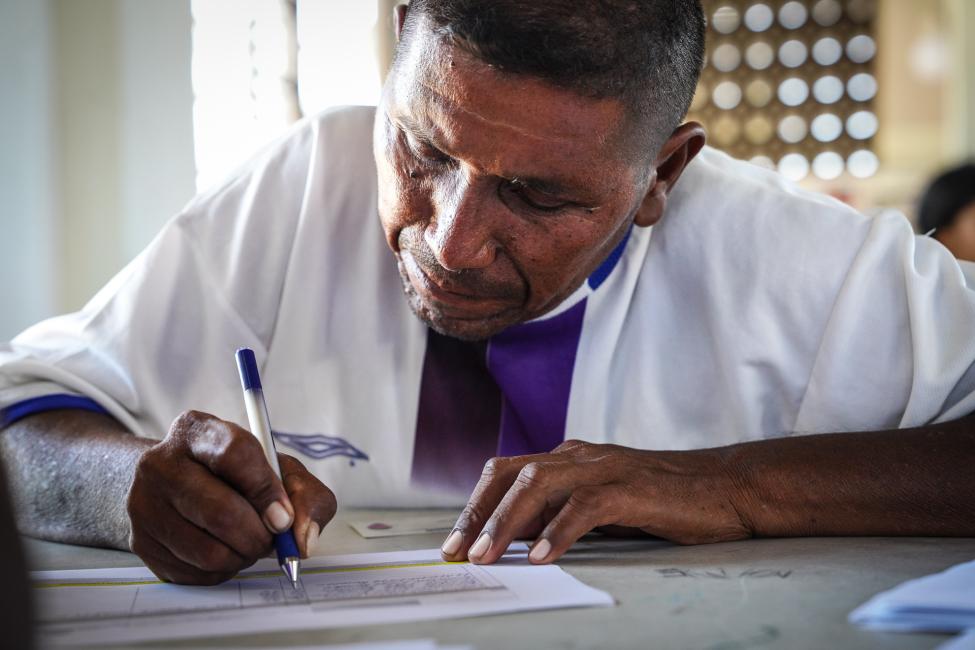
This is why interpreters matter. Too often treated as ancillary service providers, interpreters are in fact frontline urban justice workers. In hospital wards, courtrooms, and police stations, they make the difference between silence and testimony, between treatment and neglect. They are not simply conduits of words but witnesses to the marginalised lives that pass through the city’s institutions. In bearing witness, they occupy a paradoxical role: facilitating communication while also absorbing the emotional toll of stories too harrowing to forget.
Our cities pride themselves on their rich cosmopolitanism, but the absence of robust multilingual infrastructure exposes the limits of that narrative. These failures reproduce inequality in ways that maps of poverty or crime cannot capture, because they operate in the invisible space of speech. The presence of interpreters disrupts that silence. When an interpreter renders a woman’s account of domestic violence intelligible to a judge or explains a nurse’s instructions to a newly arrived mother, they become defenders of human survival. They deliver news of deportations, interpret stories of violence, sex trafficking, and poverty, changing the course of people’s lives forever. But because their labour is undervalued, contracted out, and treated as an afterthought, cities fail to see that this work is not peripheral but central to urban justice. To imagine otherwise is to accept a city where justice is conditional on fluency.
During my year as a Spanish interpreter, I learned that to interpret is to stand in the eye of injustice and try to carve a pathway toward understanding, even if the system itself resists that understanding at every turn. It is exhausting work. It is invisible work. But it is work that keeps the promise of justice alive, however fragile that promise may be.
LANGUAGE AS URBAN INFRASTRUCTURE:
Urban planners can no longer pretend that this is a marginal issue. Migration is not slowing. Climate displacement is accelerating. Cities are becoming more linguistically diverse by the year, not less. For too long, language access in the Caribbean has be entreated as the domain of NGOs, church volunteers, or the goodwill of bilingual staff pressed into duty. But this type of patchwork access has the tendency to fail precisely when people require the support of social systems the most, like at night in an emergency ward or in the chaos of a hurricane evacuation.
To ensure equitable access and uphold the principles of justice, Caribbean states should consider policy shifts that are practical, achievable, and neither radical nor unaffordable:
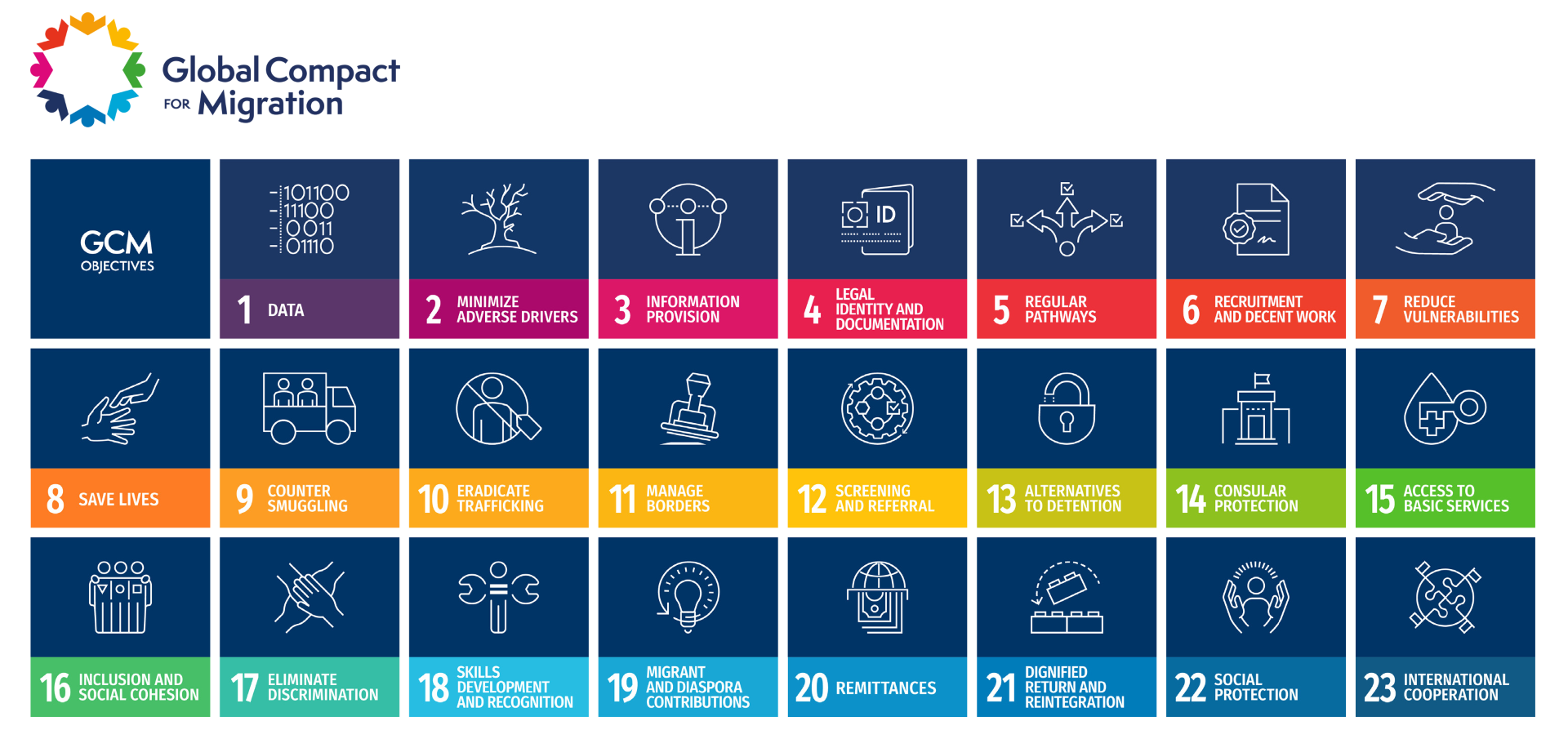
None of these suggestions are radical. In fact, they are practical, achievable, and already aligned with international commitments to human rights, equity, and resilience-planning. The Global Compact for Migration[6] calls explicitly for access to basic services including through interpretation. SDGs demand inclusive institutions and universal access. Regional migration frameworks under the Caribbean Migration Consultations (CMC) acknowledge linguistic diversity as a reality shaping service delivery. The words are already there. What is missing is implementation.
The cost of our cities’ silence is corroded trust in our institutions, driving migrants further into precarity and discouraging them from seeking life-saving help. It also affects our own citizens, with frontline staff more frustrated, more overburdened, and more likely to burn out. To act on language access is not charity or generosity. It is the minimal threshold of justice in a multilingual world. And so, the question is not whether Caribbean cities can afford to invest in interpreters and translation. The question is how much longer they can afford the costs of exclusion.
On that first day at the hospital, I presumed that the worst sentence that someone could hear was, “You’re being deported.” Now I know that it actually is, “I don’t understand.” Because behind those words is a life suspended, a plea for help unheard, a child’s pain left unexplained, a mother’s fear unacknowledged. It is the moment when systems built to protect and serve fall silent, and the person in front of you is left to navigate that silence alone.
If Caribbean cities want to claim justice, they must first learn to listen. They must build systems that recognise language as a right and not as a privilege; interpretation as infrastructure and not as charity. They must recognise that to see someone they must hear them, and to see them is the first step toward justice.
The city, as it stands, does not hear or speak for all who live in it. But it can. And it must.