.png)


“There’s a humanitarian crisis: people in informal settlements can’t sleep till midnight due to heat, especially under tin or cement-asbestos roofs. The privileged, with ACs and backup power, sleep fine.” As Vivek Gilani from FairConditioning India summarized in our 2025 interview, “the built environment is both a victim and a perpetrator” of extreme urban heat.
How we build homes, towns, and cities is a major factor that can either exacerbate or mitigate the impact of rising temperatures. Research finds that tropical city centres like Kingston can be as much as 6 °C hotter than areas with dense native vegetation (Zezzo et al, 2025). The Urban Heat Island phenomenon indicates a strong correlation between land use, particularly vegetation cover, and the intensity of these temperature differences. As towns across Jamaica urbanize rapidly, and as suburbs sprawl into agricultural areas, the amount of land surface covered in heat-producing and heat-absorbing materials like asphalt and concrete grows. These materials absorb more heat than porous surfaces or natural vegetation and then radiate that heat back into the environment.
The Seeing Heat photos included here capture how these urban materials create hostile environments that people have to seek shelter from. Whether under umbrellas or the dwindling number of large and shady trees, adaptation to heat is a matter of class, access, and affordability. The images also capture how the adaptations of those who can afford air-conditioned cars or buildings worsen the experience of those who can't.
See the compiled photos and narratives below:
Jonathan Burrell
"The heart is the one witness that cannot be bribed by reason."
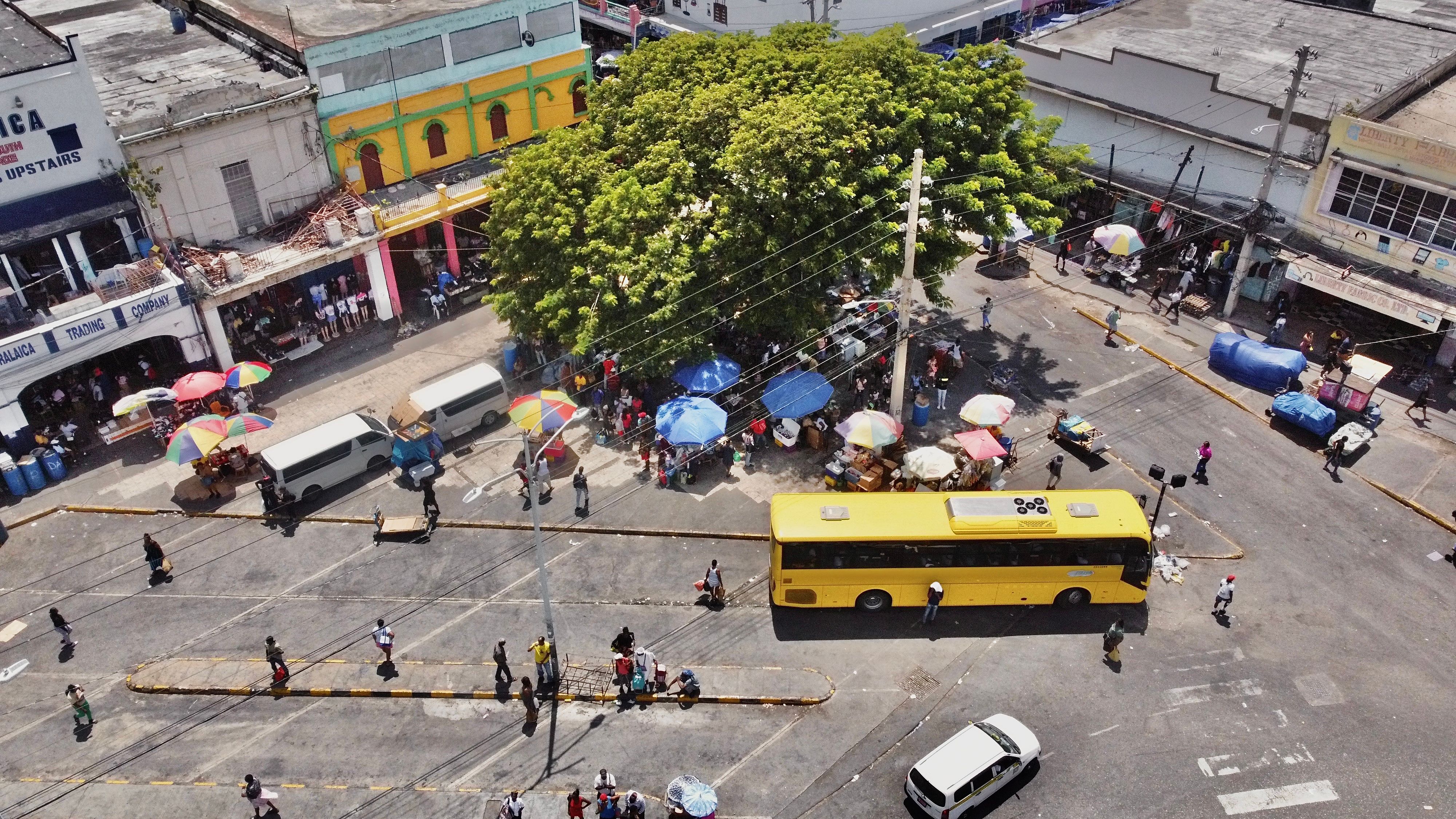
In the heart of Kingston, close to Saint William Grant Park, the city beats against the midday sun. Here, every shadow tells a story, and every street holds the weight of heat. This is where resilience lives—where people bend but do not break and where the environment and humanity wrestle with fire in the sky. To take this photo anywhere else would be to miss its truth.
Kingston's heart is more than a location—it is a pulse, a reminder that heat is not an abstract threat. It is lived, it is felt, it is survived. Here, in the city's center, the message is clear: climate is not distant—it is at our doorstep, and the heart of Kingston beats with both struggle and hope. The drone photo offers a perspective that ground-level shots can't match. Its sweeping, bird's-eye view reveals a broader context, highlighting relationships and patterns in a scene often invisible from the street. This unique vantage point shows how people interact with their environment in a world where climate change is an undeniable reality.
The core of the photo is the urgent relationship between humans, the midday sun, and the natural world. In the intense heat, people instinctively gather beneath a tree for shade. This simple act is a powerful visual statement: in a warming world, nature is our last and most critical line of defense. The tree stands as both a physical refuge and a profound symbol of balance and resilience. Every leaf helps cool the air, and its roots anchor life in parched soil. This image makes it clear that if we protect nature, it will, in turn, protect us.
The photo also captures a moment where the sun has become so hostile that it forces people to seek shelter. An umbrella in the image serves as a fragile,temporary shield—not from rain, but from blistering heat. This object highlights how climate change forces humans to adapt in small, desperate ways. Unlike a tree, which offers genuine relief, the umbrella is a powerless, man-made defense, reminding us of what has been lost. The picture is about survival, showing how everyday acts have become a battle against rising temperatures. It reveals a world where hours once filled with vitality are now marked by retreat and endurance.
Finally, the image extends its warning to the built environment. A cracked concrete ceiling speaks to the silent, destructive force of extreme temperatures. Heat expands and contracts, slowly breaking down even our most solid materials. This fracture is more than just damage; it's a powerful warning that rising heat can wear down the very structures we trust to protectus. The image captures the truth that climate change spares nothing and no one—not the land, the people, or the buildings we hide beneath.
Gerald Gordon
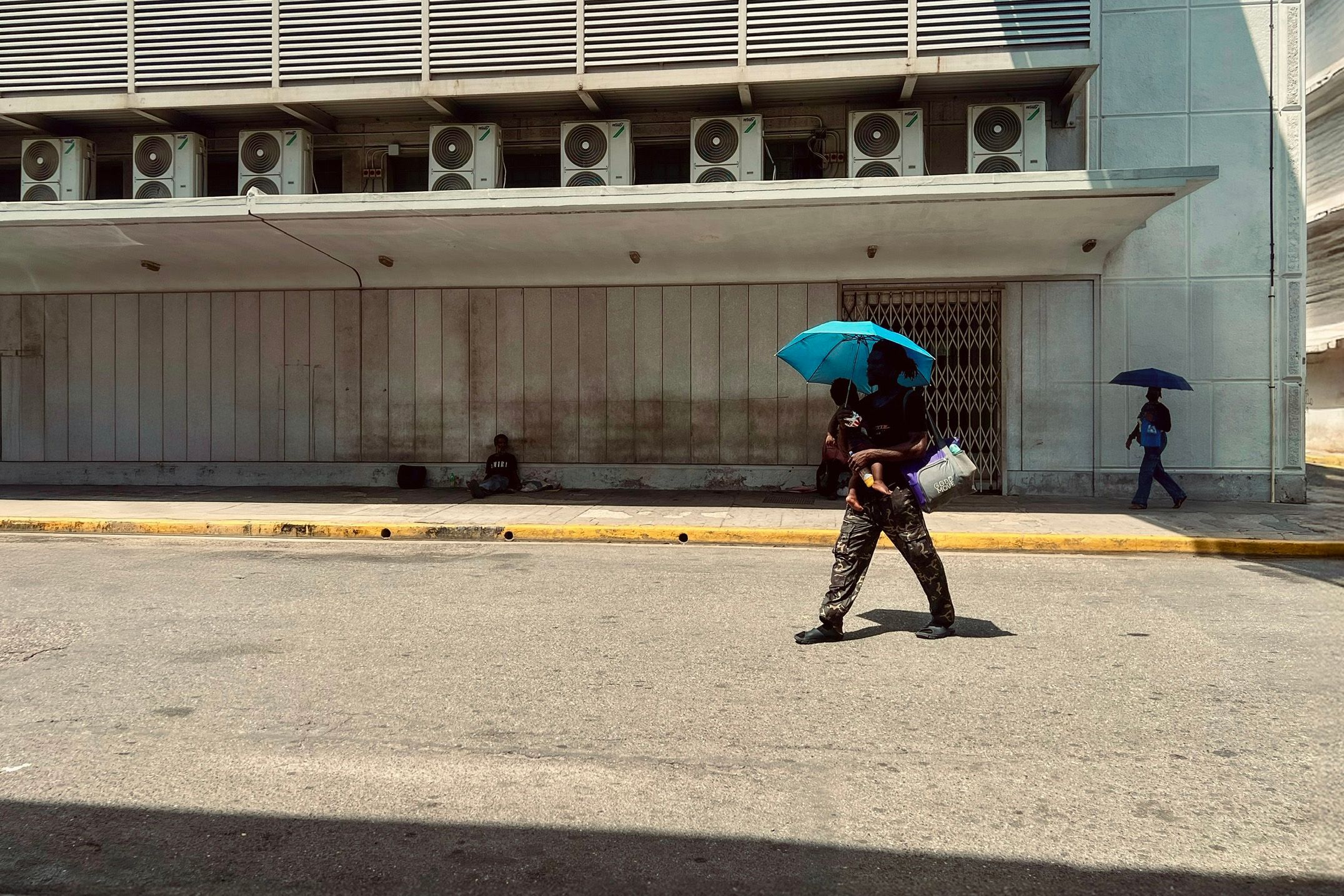
This fine art photograph captures a moment of quiet endurance on Barry Street in downtown Kingston, illuminated by the glaring intensity of a daily sun. A young man strides forward, carrying a baby who clings to his side with a trust that transcends the weight of circumstance. An umbrella unfolds above them, a fragile shelter that shelters both child and adult from the heat, while the man bears the bulk of responsibility, his shoulder weighted with a bag that seems to pulse with the contents of daily life: baby bottles, essential goods, little necessities pressed into a hurried rhythm of travel. In his other hand, a crumpled paper cup and a bottle of drink punctuate the scene, gestures that hint at routines of sustenance and pause within a journey that must endure.
The juxtaposition of the man’s fatigue and his steadfast forward motion becomes the photograph’s emotional core. His eyes carry a quiet gravity, a resolve that does not relent despite the visible strains of tiredness. Yet there is a dignity in the act itself: a deliberate nourishment of a vulnerable life, a microcosm of care that holds the city’s pace in quiet tension. The umbrella, more than a practical shelter, becomes a symbol of an improvised, personal shield against the relentless urban heat, a make-shift sanctuary that illuminates resilience rather than defeat.
In the background, a woman also seeks shade under her own umbrella, a parallel affirmation of human need and the shared human tactic of seeking relief from sun’s edge. The composition invites reflection on mobility, vulnerability, and endurance within a city that seldom slows. The piece asks viewers to consider how shelter is not merely physical protection but a visible act of responsibility, an emblem of care carried forward in the heat of daily life. The resulting image is a quiet meditation on survival, dignity, and the quiet heroism found in everyday journeys.
Brian Gillings
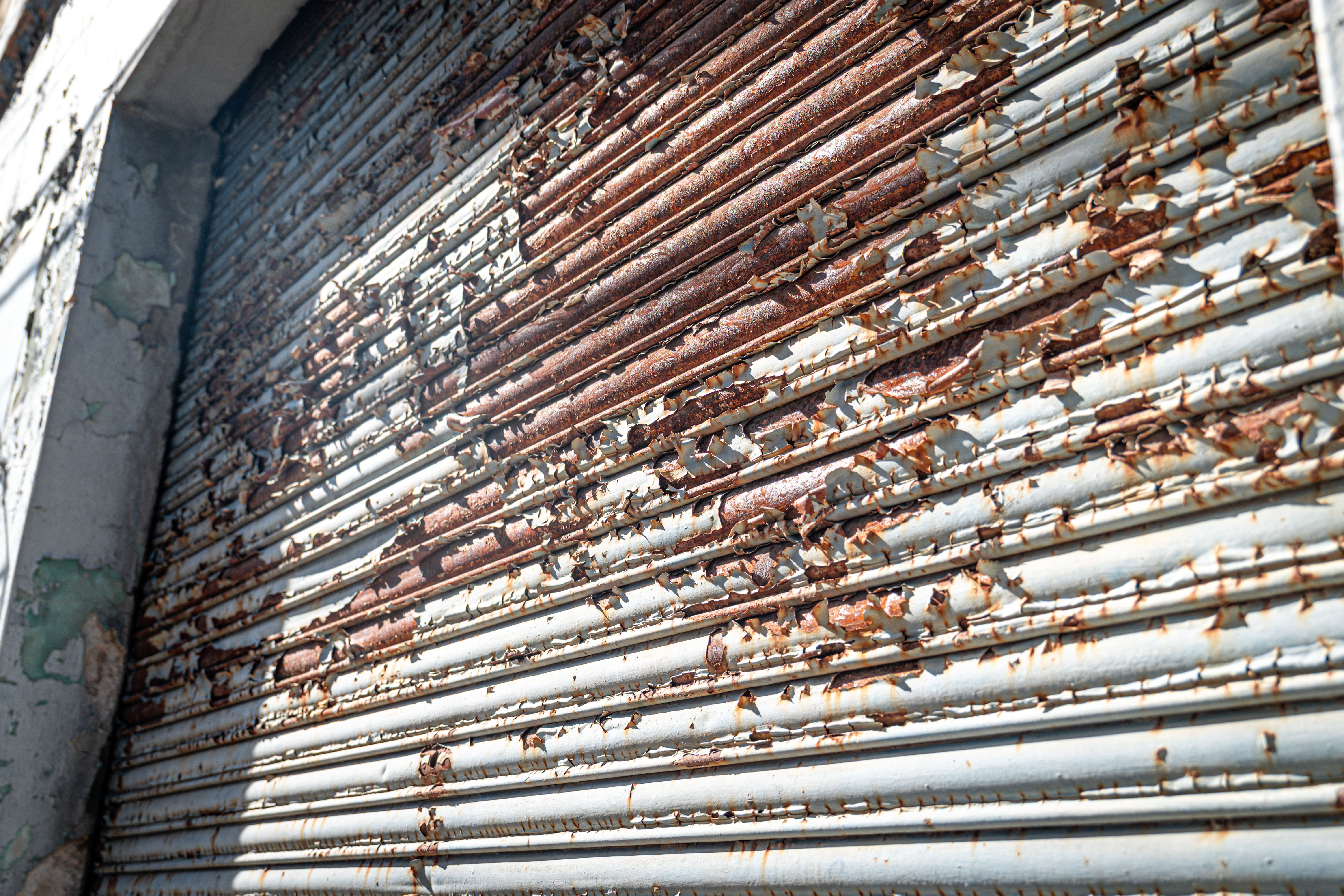
Heat leaves its mark in waysoften overlooked, not only in the shimmer of mirages or the haze of a burningafternoon, but in the quiet decay etched into the surfaces of our everydayspaces. This rusted shutter, once sturdy and protective, now carries the scarsof relentless sun and sweltering air. Its peeling paint and corroded metaltestify to heat’s slow but unyielding power — a force that reshapes not onlythe materials of our built environment but also the patterns of life within ourtowns and cities.
In Jamaica, heat does not arrive as a passing guest; it settles in, embeddingitself into the very fabric of urban living. Metal, designed to endure, becomesbrittle. Paint, once vibrant, curls and flakes like dry leaves under the sun.What was once protection for a shopkeeper — a barrier between livelihood andloss — is now compromised by years of exposure. Heat here has a shape: jagged,peeling, rust-colored, transforming the familiar into something fragile anduncertain.
The image is more than a shutter in disrepair. It is a mirror of adaptation andresilience. For every shutter like this one, there is a shopkeeper who risesearlier to beat the morning heat, who invests in repairs that never seem tolast, who finds ways to continue despite the toll that climate quietly leavesbehind. Heat reshapes routines as much as it reshapes metal. It dictates whenwe walk, how long we work, what we wear, and how much we can endure. Beneaththis shutter’s story lies the lived experience of communities forced to adjust,often invisibly, to the creeping permanence of higher temperatures.
The shutter’s decay also signals the fragility of infrastructure in a warmingworld. In cities where heat intensifies year after year, structures are notjust tested but transformed. What begins as rust on a shutter spreads intolarger challenges: weakened buildings, mounting repair costs, and neighborhoodsthat feel harsher to inhabit. The shape of heat is cumulative, layering itselfover time until what was once strong becomes vulnerable, until protectionitself becomes exposure.
Yet within this vulnerability lies a call for imagination. The shapes carved byheat urge us to rethink how we design, build, and protect ourselves. If heatcan curl paint and twist steel, what new forms might emerge if we chose toadapt more consciously? Perhaps shutters of different materials, perhapscooling designs woven into architecture, or perhaps entire cities reimagined tobreathe with the tropics.
In the end, the shape of heat is not only found in warped metal. It is found inus — in our endurance, creativity, and will to reimagine life in a climate thatis constantly reshaping the world around us.
Ishasha Brooks
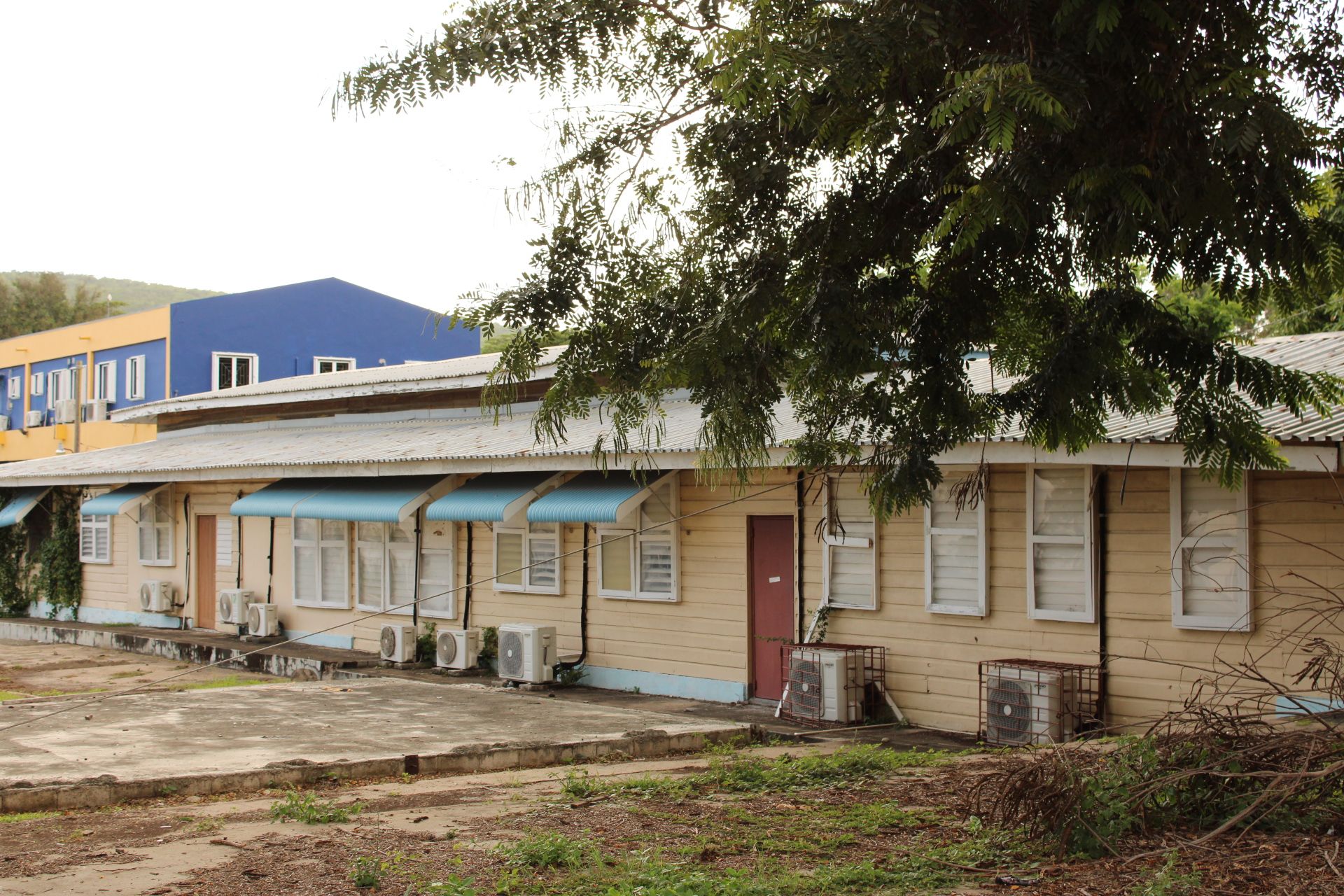
When I look at this building, I see the story of how heat has reshaped daily life. Rising temperatures are no longer just about physical discomfort. They carry financial, environmental, and personal costs that are hard to ignore. The simple structure before us, lined with air conditioning units speaks volumes about the toll of a world that is getting hotter.
Every window of the building has an air conditioning unit fitted tightly beneath it. These machines work tirelessly, battling against the relentless heat outside. Once, in past times, people relied on natural ventilation, shade, and the cool of the evening to refresh their homes and workplaces. Now, those measures are no longer enough. The air conditioners, though essential for comfort and even health, represent a great cost. They drive electricity bills higher each month, forcing families and businesses to choose between staying cool and managing their budgets. Relief from the heat has become expensive, and in many cases unaffordable.
The structure itself bears scars of long exposure to harsh conditions. Thefaded paint, the peeling surfaces, and the worn foundation suggest years ofenduring sweltering days. Even the blue awnings above the windows stand as akind of shield—small attempts to block the punishing sun. Yet they also tell usthat the natural defenses people once relied on—shade trees, open breezes—havebeen outpaced by the intensity of today’s climate.
The surrounding tree offers a canopy, casting dappled shade across theroofline. Its presence is a reminder of nature’s original answer to heat:shelter, cooling air, and balance. But now, that relief is insufficient on itsown. The machines humming below the windows are proof that technology has beenforced to take over where nature once sufficed. It is a shift that hasfinancial, environmental, and cultural consequences.
The cost of heat here is layered. It’s not just about higher electricity bills. Each unit pumps heat back into the environment, raising outdoor temperatures and worsening the urban heat island effect. The very machines that cool the inside make the outside even hotter. It’s a cycle that fuels itself, a feedback loop of energy use and rising temperatures.
On a personal level, the toll is heavy. For someone living or working inside, comfort now comes at a price. It’s the parent who wonders if running the ACthrough the night is worth the higher bill at the end of the month. It’s theelderly person whose health depends on cool air but whose fixed income cannotkeep up with costs. It’s the worker who finds that the heat saps energy, productivity, and even mood.
This single building captures the larger truth: heat is costly. It wears down structures, strains finances, and pushes communities into deeper dependence on systems that cannot keep up forever. The cost of heat is everywhere in faded walls, humming machines, and rising bills and it’s a price too heavy to ignore.
Syldan Thompson
It’s one of those things that elderly Jamaicans would say to express their resignation to inequalities that they have perceived; some have things better or easier than others. In the unleveled world, some complain about being stuck in traffic (being the traffic), albeit likely in air-conditioned comfort, while others are stuck in the inescapable heat. Those outside on foot in the heat absorbing concrete jungle of the urban environment are attacked by heat from the sun, heat from the road alongside which they walk, heat from the removal of trees to facilitate the never-slowing urban growth, and heat from the traffic.
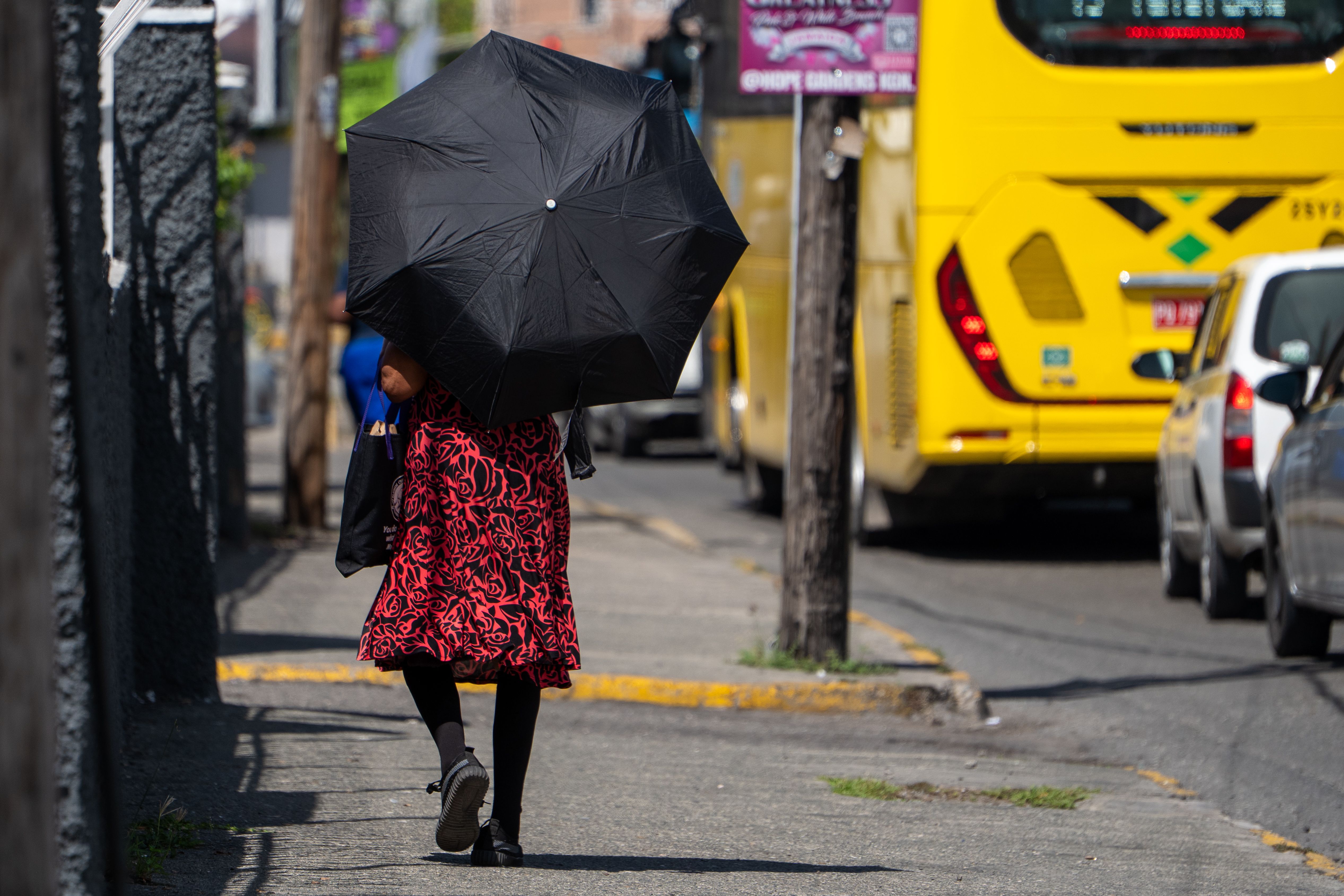
This photo shows an elderly woman along Old Hope Road in Kingston, Jamaica, with the dense midday traffic. The unrelenting sun beats down on her as she makes her way down the street. She carries a small umbrella to help shield her from the rays. Her legs are clad in thick black stockings, an unexpected item of clothing considering the rising temperatures, but perhaps they are a sign of health complications. Her umbrella and the “sneakers” are the only comforts she has mustered up for her journey.
This image tells a much larger story about climate change, heat in urban contexts, and the challenges of this vulnerable group. Her umbrella serves as a symbol of determination, awareness, and resilience. She recognizes the need to protect herself against the scorching sun and is determined not to let it stop her from going about her business in the city. The umbrella represents a small, but increasingly important adaptation Jamaicans must make to cope with the changing heat conditions. The vehicles which line the street are sources of the greenhouse gases that fuel the climate crisis. The irony of an elderly woman walking in the sun alongside the vehicles emitting heat and exhaust while cooling their occupants is also very glaring. World nuh level.
For the elderly, especially women, the vulnerabilities are varied and complex. Many of them survive on meagre pensions or remittances, with limited access to health care, cooling technology, or adapted public spaces. Their lives highlight the intersection of biological and economic vulnerabilities, which are exacerbated by social inequalities. Government policies unfortunately aren’t directed at addressing the realities of the vulnerable. Major road works across Kingston in the last ten years, what was dubbed a legacy project, have given little to no consideration to pedestrians in their design. The result has been an increase in road fatalities. Unreliable public transportation systems and urban growth have wiped out any gains from road expansions, and the traffic continues to pile up, but they all go somewhere to park, somewhere where trees have been removed, soil paved over into car parks, all adding to the urban heat.
In the meantime, those who struggle to afford even public transportation in some cases are left to feel the heat, as they move about the urban jungle of Kingston, shielding themselves however they can.