.png)


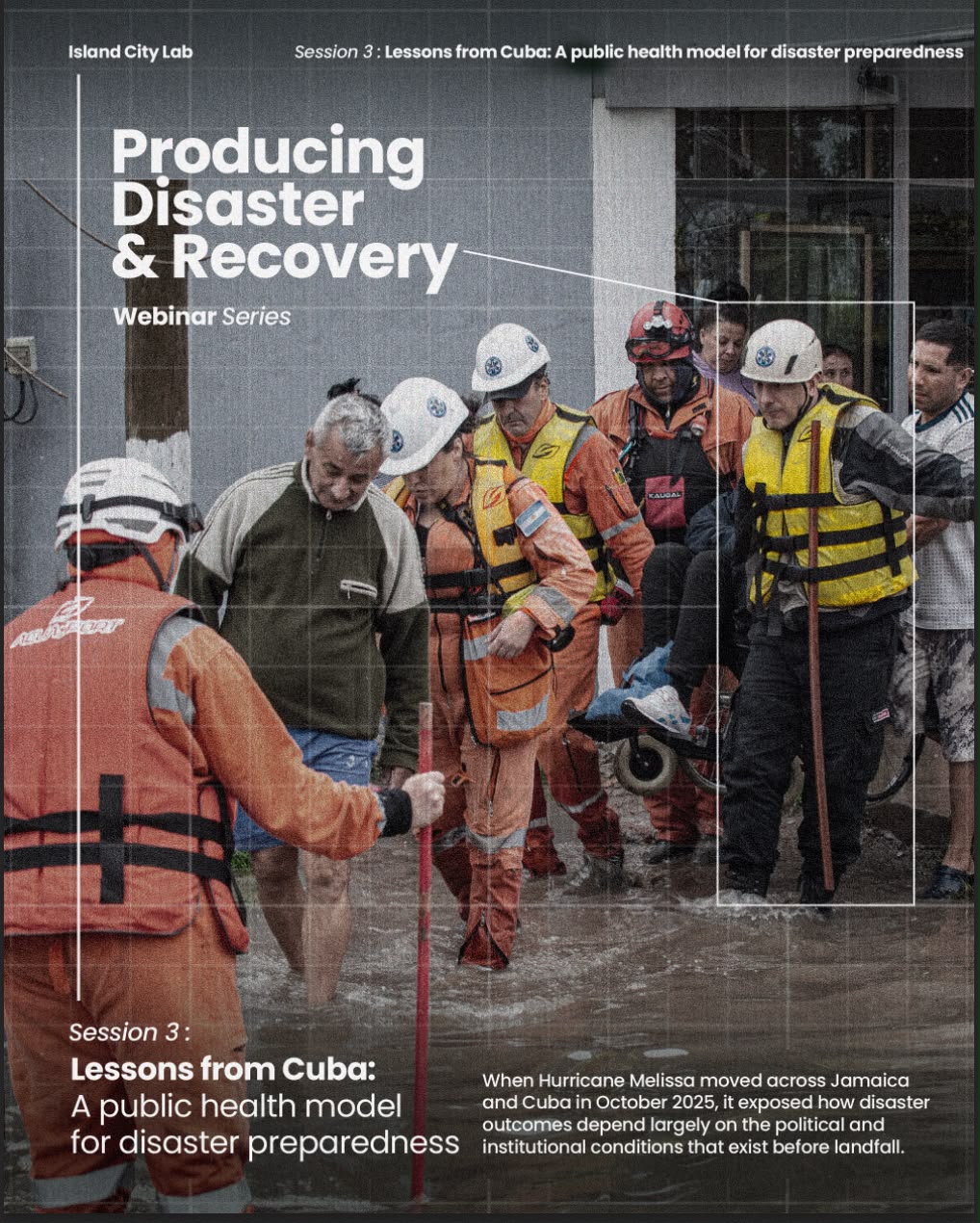
When Hurricane Melissa moved across Jamaica and Cuba in October 2025, it exposed how disaster outcomes depend largely on the political and institutional conditions that exist before landfall. Cuba evacuated more than 735,000 people and sheltered roughly 120,000, reporting no fatalities even as the storm damaged more than 215,000 homes, disrupted water and electricity systems, and left hundreds of health facilities affected. The United Nations considers Cuba a model in hurricane risk management’, its example shows how public organization, civil defense, and social infrastructure can dramatically alter who lives, who is exposed, and who bears the longest aftermath.
This webinar asks what Jamaica can learn from Cuba's model of preparedness while remaining attentive to the limits imposed by an uneven global economy, limited state capacity, and different political histories. The session will explore neighbourhood-level planning, evacuation systems, early warning, public health coordination, and the role of collective institutions in reducing risk before disaster strikes. It will also open a broader discussion about whether meaningful preparedness is possible without sustained public investment, and what a community-rooted preparedness infrastructure might look like in the Jamaican context.
This program is free and open to all. Advance registration is required. All registered participants will be sent a link to participate through Zoom.
22 October 2026
12:05 pm
1:05 pm
This event is hosted on Zoom


Our virtual events are currently free and open to all. By making a contribution today, you can help us continue to produce vital, relevant, and accessible programming this year and beyond.
This program is free and open to all. Advance registration is required. All registered participants will be sent a link to participate through Zoom.
22 October 2026
12:05 pm
1:05 pm
This event is hosted on Zoom
When Hurricane Melissa moved across Jamaica and Cuba in October 2025, it exposed how disaster outcomes depend largely on the political and institutional conditions that exist before landfall. Cuba evacuated more than 735,000 people and sheltered roughly 120,000, reporting no fatalities even as the storm damaged more than 215,000 homes, disrupted water and electricity systems, and left hundreds of health facilities affected. The United Nations considers Cuba a model in hurricane risk management’, its example shows how public organization, civil defense, and social infrastructure can dramatically alter who lives, who is exposed, and who bears the longest aftermath.
This webinar asks what Jamaica can learn from Cuba's model of preparedness while remaining attentive to the limits imposed by an uneven global economy, limited state capacity, and different political histories. The session will explore neighbourhood-level planning, evacuation systems, early warning, public health coordination, and the role of collective institutions in reducing risk before disaster strikes. It will also open a broader discussion about whether meaningful preparedness is possible without sustained public investment, and what a community-rooted preparedness infrastructure might look like in the Jamaican context.
Our virtual events are currently free and open to all. By making a contribution today, you can help us continue to produce vital, relevant, and accessible programming this year and beyond.